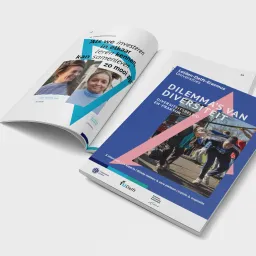


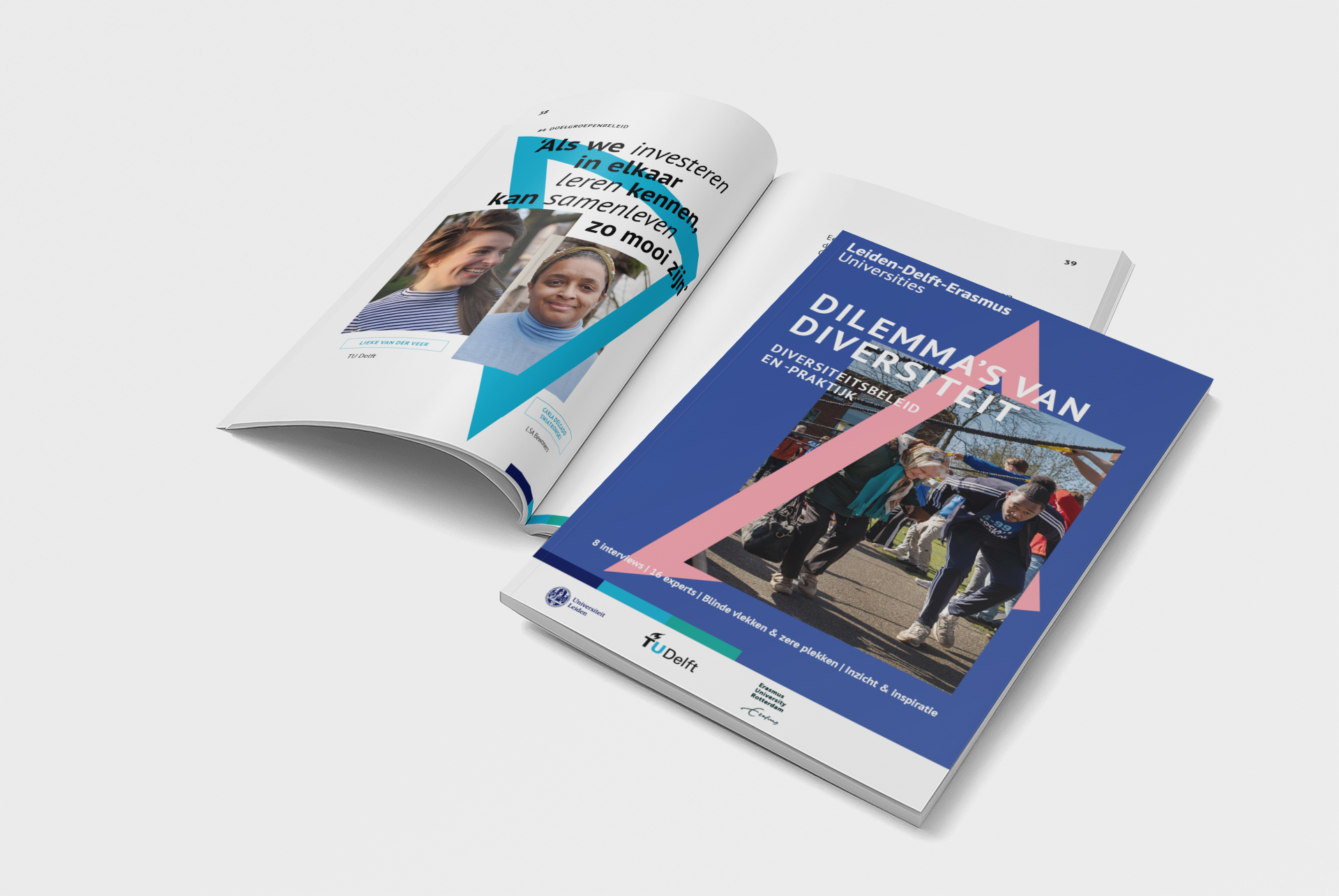
A square block that does not fit through a triangle-shaped hole. Project leader Carla Delgado Swiatkowski and ethnographic researcher Lieke van der Veer see many meaningful residents' initiatives fail in this way. The municipality cannot then give a subsidy, no matter how much a civil servant wants to. 'I had an almost crying civil servant on the phone this week.'
What kind of residents' initiatives do you have to deal with at the National Association of Active Residents?
 Carla Delgado Swiatkowski: 'It can be something small to promote a sense of community, creating a meeting place, for example. Or a major campaign to tackle the mold in rental properties or to make a residential area more sustainable. We help with, for example, training on legal or financial knowledge. Or we go along to discussions with the municipality or a housing corporation, as reinforcement.'
 Lieke van der Veer: 'As an anthropologist, I have been following how residents' initiatives navigate through the municipal organisation for a long time. For example, I attend meetings between initiators and the municipality. An example is Aktiegroep Het Oude Westen in Rotterdam. In the seventies, they stopped large-scale demolition. Since then, they have been active in the neighborhood in all kinds of ways. People can go there with questions, problems and ideas. They can find help filling in a form and can meet there. But that initiative is at risk.'
We should have such initiatives everywhere!
Delgado Swiatkowski: 'This action group is in a very diverse neighbourhood. Millionaires and people with little income live there, and about a hundred different cultures. There are volunteers who are good cooks and volunteers who can talk well with the municipality. Over the years, they came to the LSA for knowledge sharing and support. They have a building in the middle of the neighborhood, where anyone can walk in. They are in danger of losing that building.'
The municipality thinks in boxes and initiators think in neighbors'
'The Action Group is a kind of umbrella organization, a springboard for various initiatives. But the municipality subsidizes isolated activities and does not offer continuity. And someone who has a nice, subsidizable initiative often runs into the fact that everything is framed and digitized and you have to comply with all kinds of things. Suddenly all communication has to be in Dutch. Or an initiative must include social entrepreneurship. A term that many initiators are not concerned with at all, even though they absolutely meet it. The municipality thinks in boxes and the initiators think in neighbors.'
That sounds like a mistake.
Van der Veer: 'Initiatives that the municipality believes are too focused on one target group are also under threat. In the current political climate, it is increasingly established that initiatives must be "for everyone". Municipalities are quick to say: "We are withdrawing your subsidy, because your initiative locks people up in a kind of ethnic box and we want to promote diversity." While I also know an organization that is told by the municipality that they are too diverse. This organization was founded by people with a migration background from different countries and helps not only refugee status holders but also local residents with complex problems. Initiatives must therefore ensure that they are diverse enough, but also not too diverse. These are sometimes inimitable arguments.'
This also seems difficult to me for civil servants who have to assess applications.
Delgado Swiatkowski: 'I had an almost crying civil servant on the phone this week: "I want to keep this. It's so important, but I can't get it into the system." That is the difference between the system and the living environment. The square block of the initiative does not fit through the triangular hole of the municipality, and those are very frustrating conversations on both sides.
Sometimes a gutsy guy puts his job on the line and does it anyway'
Sometimes a gutsy guy puts his own job at risk and does it anyway. Someone who is about to retire, for example. On the one hand, I think that's commendable, but it's worrying that someone can suffer so much from this.'
'Yesterday I spoke to an initiator who, in order to receive about 10,000 euros, had two years of conversations with various officials. If you compare the costs of those conversations with the costs of the initiative, you think: what the hell are we doing? Especially in certain cities, I would say: put the three hundred thousand euros it costs to spend eight hundred thousand euros into refurbishing mouldy houses, or into children who go to school without food.'
Has target group policy become a taboo?
Van der Veer: 'Yes, municipalities think target groups are a form of pigeonholing, and pigeonholing is seen as wrong. While municipalities also do not want to make vague policies and ask civil servants to fit initiatives into certain subsidy frameworks – which are of course also a kind of pigeonholes. A civil servant must use criteria to show that social justice policy has an impact, because otherwise mainly right-wing parties are quick to think: you can't show that it works, so get rid of it.'

Does this issue mainly play a role in social initiatives in which diversity plays a major role?
Delgado Swiatkowski: 'Successful social initiatives often include people with a migration background, and people with an academic background. A volunteer who works at the university, for example, or a lawyer. If they all do something together, everything works great. But initiatives by people who do not speak the Dutch language well are difficult to get support. Digitization also plays a role, so initiatives with only the elderly are struggling. Such initiatives start with a 2-0 deficit.'
Van der Veer: 'I speak to civil servants who make social justice policy. They have to defend themselves against delusions spread by right-wing politics that this policy would be racist, because it would be at the expense of the white man. While that policy is precisely what is needed to tackle inequality.'
Do we need positive citizenship policies?
Van der Veer: 'Citizenship policy is sometimes just a disguised austerity measure that sets people against each other. Since the 1980s, the idea arose that the welfare state would have pampered everyone too much. So the idea was that we should become self-reliant, start our own initiatives, become active citizens.'
Initiatives must be diverse enough, but not too diverse either. They are sometimes inimitable arguments'
Delgado Swiatkowski: 'Look at refugees, for example, people with a forced migration background. The government knows exactly how many technicians and dentists are among them, but does nothing with it.' Van der Veer: 'These people are pressured by municipalities to prove "good citizenship" by doing unpaid work in cleaning or childcare for a very long time, or accepting low-paid work at a delivery service. These are people with a residence permit, who are doing their very best to learn the language, for example, to start their lives here.'
These are huge problems. How can we solve them?
Delgado Swiatkowski: 'Democracy is about being able to hear all voices. You don't have to follow them all, but they have to be able to come together, there has to be room for everyone, dialogue. If we invest in getting to know each other and talking to each other, living together can be so beautiful. I have seen the same people who protested against an asylum seekers' center later protest against its departure. A lot is going well and a lot of beautiful things are happening. Unfortunately, that usually doesn't make the news.'
text: Rianne Lindhout
Carla Delgado Swiatkowski studied art history and international relations and worked directly and indirectly in the world of forced migration for more than twenty years. She is project leader at LSA Residents (National Partnership of Active Residents), which supports residents' initiatives throughout the Netherlands.
Lieke van der Veer is trained in social anthropology and political philosophy and works in Urban Studies at TU Delft. In her policy ethnographic research, she studies knowledge production, alliance formation and forms of administrative craftsmanship that underpin diversity policy.
This a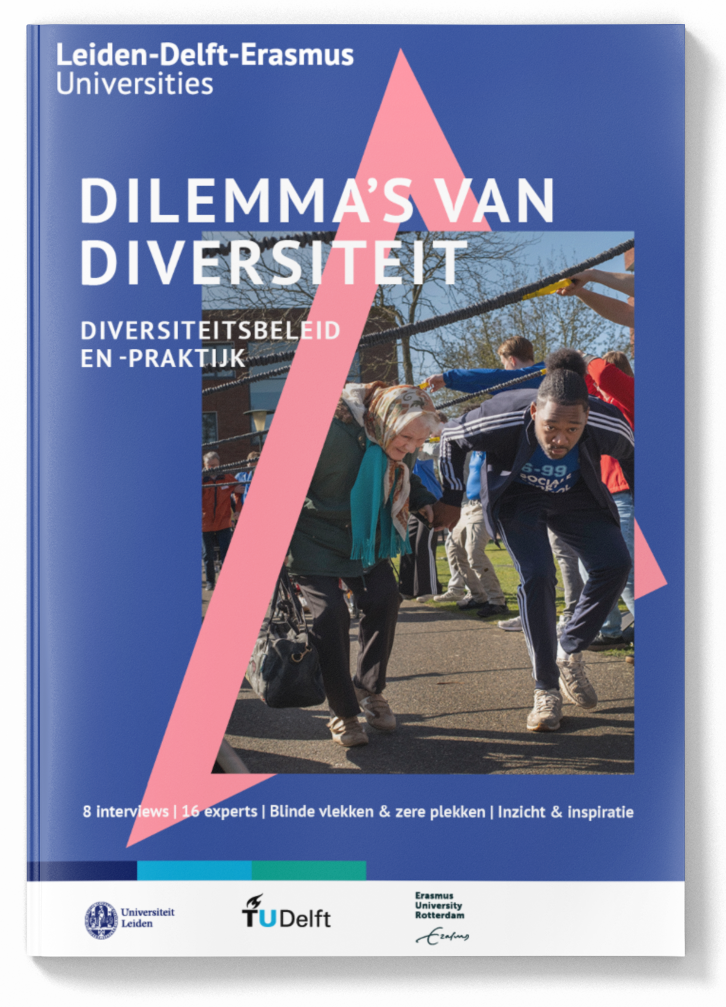 rticle is from the new Leiden-Delft-Erasmus white paper 'Dilemmas of Diversity'. Find the download link below this text.
Would you like to receive a paper copy? Send an e-mail to Katja Hoiting via k.hoiting@tudelft.