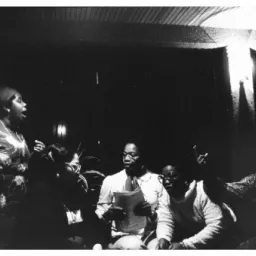


Providing good care for older migrants involves navigating the tension between universal and culture-specific needs. Anyone who relies on stereotypes based on origin fails to see the person behind them, says researcher Nina Conkova. At the same time, culturally sensitive care does require attention to specific norms, values and customs, as care provider Kadriye Sahin-Ozogul explains. By Meike Schipper
What is the fundamental challenge in providing care for older migrants?
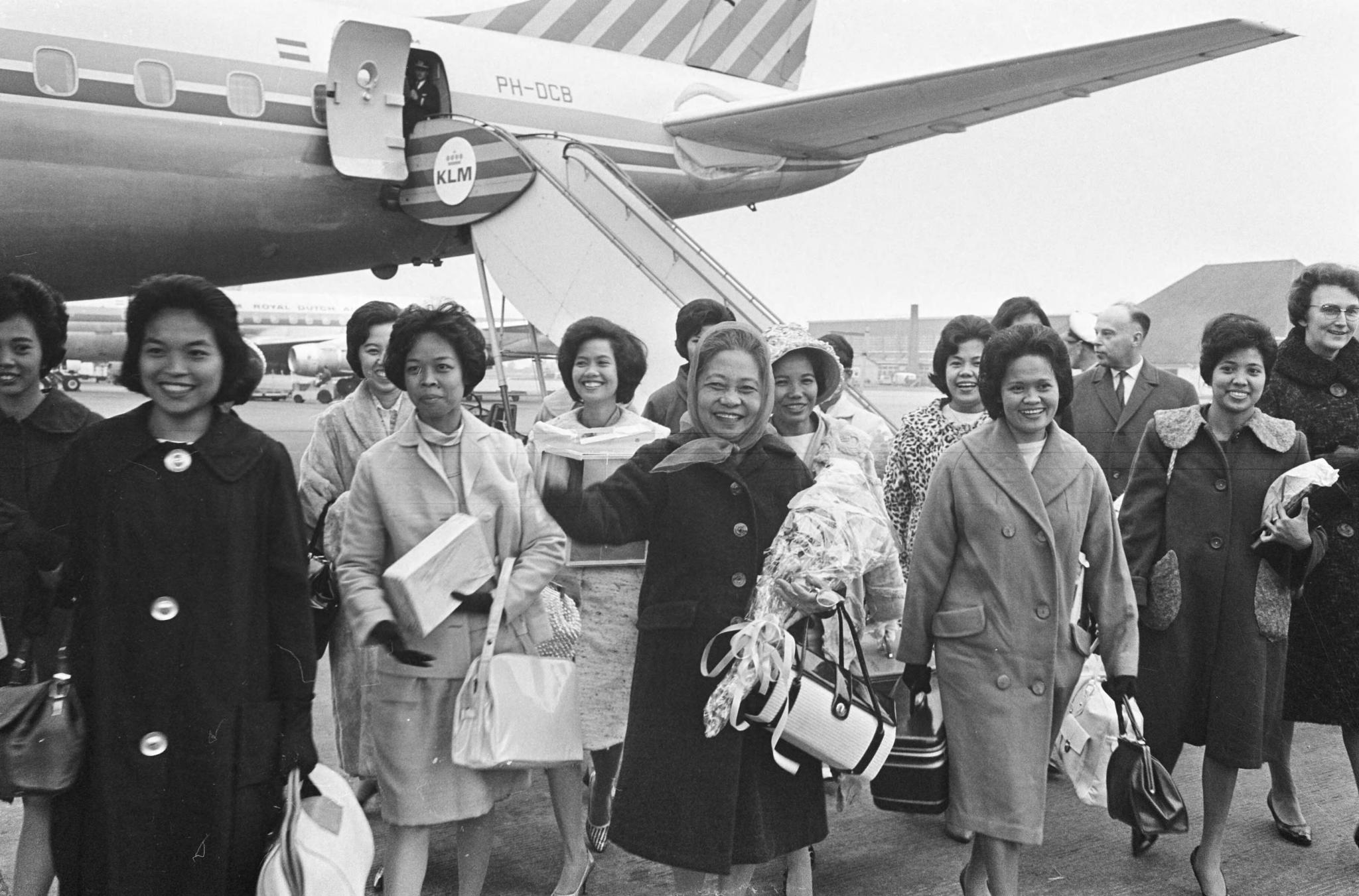
Nina Conkova: ‘The healthcare system is quite rigid. Truly implementing culturally sensitive care within the healthcare system is a major challenge. And it is necessary, because the people – particularly migrant workers – who came to the Netherlands in the 1960s and 1970s are getting older and are in need of care.
‘The question is how we can meet the care needs they have. Because there are quite a few stereotypes out there, even though there is enormous diversity. The biggest assumption people make about caring for older migrants is the idea that these people are very different from those without a migrant background. Everyone simply wants to feel seen and heard, to receive good care, and for their loved ones to remain involved.’

So why is culturally sensitive care necessary?
Kadriye Sahin-Ozogul: ‘The cultures are very different; the norms and values are very different. It requires quite a lot of knowledge about what you can and cannot do if you want the care to be accepted. For example, we have an Islamic residential care home where mainly Turkish and Moroccan people with Alzheimer’s live. Yet the care provided is completely different. One person eats with their hands, whilst another finds that annoying. You see that the Turkish residents want to eat with a spoon and fork, whilst older Western Surinamese people really want a knife. And you cannot give them crockery that has a chip in it. Even though they have dementia, they never forget that.’
Conkova: ‘As a care provider, you can’t possibly know all that. Language is also a major problem, because care is about relationships. Another problem is racism and discrimination. These really stand in the way of ensuring that people feel seen and heard. You don’t even need to speak the language, as long as people feel your empathy, feel that you’re there for them, that you’re kind. People can sense that.’
One person eats with their hands, whilst another finds that annoying’
What other assumptions about older migrants are incorrect?
Conkova: ‘For example, the idea that older migrants want to stick to their own group. In our research, we found many people who actually feel more at ease in a multicultural setting. They say: “I’ve been in Amsterdam for fifty or sixty years; I’ve known nothing but the multicultural community where everyone belongs.”’
People also often talk about ‘the older migrant’ as if it were a single group, but there is enormous diversity amongst older migrants.’
Is care for older migrants actually better than it used to be?
Sahin-Ozogul: ‘Yes, about ten or fifteen years ago, there were many problems with diagnosing Alzheimer’s. For example, a picture would be shown and the question asked: Is it a bicycle or a scooter? But the client doesn’t know what a scooter is and has never even ridden a bicycle. That’s very culture-specific. Or there might be a Turkish interpreter, but the client comes from a specific region and can’t understand a word the interpreter is saying. Those sorts of issues have now been improved.’
Conkova: ‘If you’d talked about care for older migrants ten years ago, people wouldn’t have known what you were on about. It was really rare for an older person with a migrant background to end up in the formal care system. Ten years ago, it was also still very much a taboo for a migrant to say: “I’d like to put my mother in a care home.” Now that taboo has eased somewhat.’
Do background and culture influence how easily older people accept care?
Sahin-Ozogul: ‘In Dutch families, it’s the norm for children to be told by their parents: “When I can no longer manage, take me to a care home.” But within Islam, for example, caring for one’s parents is seen as an important moral and religious duty.’
Conkova: ‘Some people have grown up in a cultural context where care homes simply do not exist. I come from Bulgaria, where care homes do not exist. If you were to do something like that to your parents, you would be ostracised from the community.’
Sahin-Ozogul: ‘Actually, it’s not the elderly people with dementia who are the problem; rather, we have a lot of issues with informal carers. Sometimes they feel a huge sense of responsibility or don’t want to “leave their parents behind”. Sometimes there are six children, all with different opinions about admission. Then a discussion ensues and, in the end, the decision is made: we’ll keep her at home; we’ll sort it out amongst ourselves.’
Shouldn’t you respect that cultural difference, then?
Sahin-Ozogul: ‘With Alzheimer’s, that’s difficult. By the time someone really needs care, it’s actually already too late. So I do ring them now and then or pop round for a spontaneous home visit.’
Conkova: ‘It’s also a stereotype that older migrants want or are able to be cared for entirely by family, simply because they have larger families. Sometimes family isn’t that involved at all, or isn’t in the Netherlands. So if you assume that stereotype, you overlook people who don’t have any available family members. In a study, we asked what people themselves wanted. Many older migrants said: “We don’t really want to be a burden on our children, but nobody asks us. I understand that they have their own lives too, their own children, a job.”’
How can we better prepare older migrants and their families for future care needs?
Sahin-Ozogul: ‘Years ago, I took my parents to a care home to show them what it was like. They both said: “Just take us there if anything happens.”’ We also hold information sessions in mosques, and people are welcome to drop in. They often say: “I’m not old yet; I won’t be coming.” But you should come now, precisely because it’s about the future. You want to be able to make that choice whilst your mind is still clear.’
Conkova: ‘I think you really need to start preparing for this before you retire. We should introduce policies to make it compulsory to have a discussion about this, either as a family or with your general practitioner (GP).’
I took my parents to a care home once, years ago’
What else is needed to improve care for older migrants?
Conkova: ‘A certain understanding of culture is necessary, but what matters most is whether there is a willingness to respect one another and to allow space for each other’s customs and ways of thinking. And that can be quite complicated, because as a care provider, you actually have to be able to set aside parts of yourself. And the patient should do the same, in order to grow closer to one another.’
Sahin-Ozogul: ‘Yes, you should never get into a debate with a client about how the Dutch mentality is simply this way or that way. My approach is based on respect and acceptance. I’m a Muslim myself, but my Surinamese group has a morning prayer on Fridays and they want me to join them. When they say “amen”, they look at me, and I nod my head. “You believe in that, and I respect that.”’
As a healthcare professional, you actually have to leave a part of yourself behind, and so does the patient’

Nina Conkova is a policy researcher at the Province of Utrecht. She previously worked as a researcher and programme leader in the field of cultural diversity at the Leyden Academy on Vitality and Ageing, where she holds a visiting position. Her research focused on how ageing and diversity shape well-being, access to care and social cohesion.
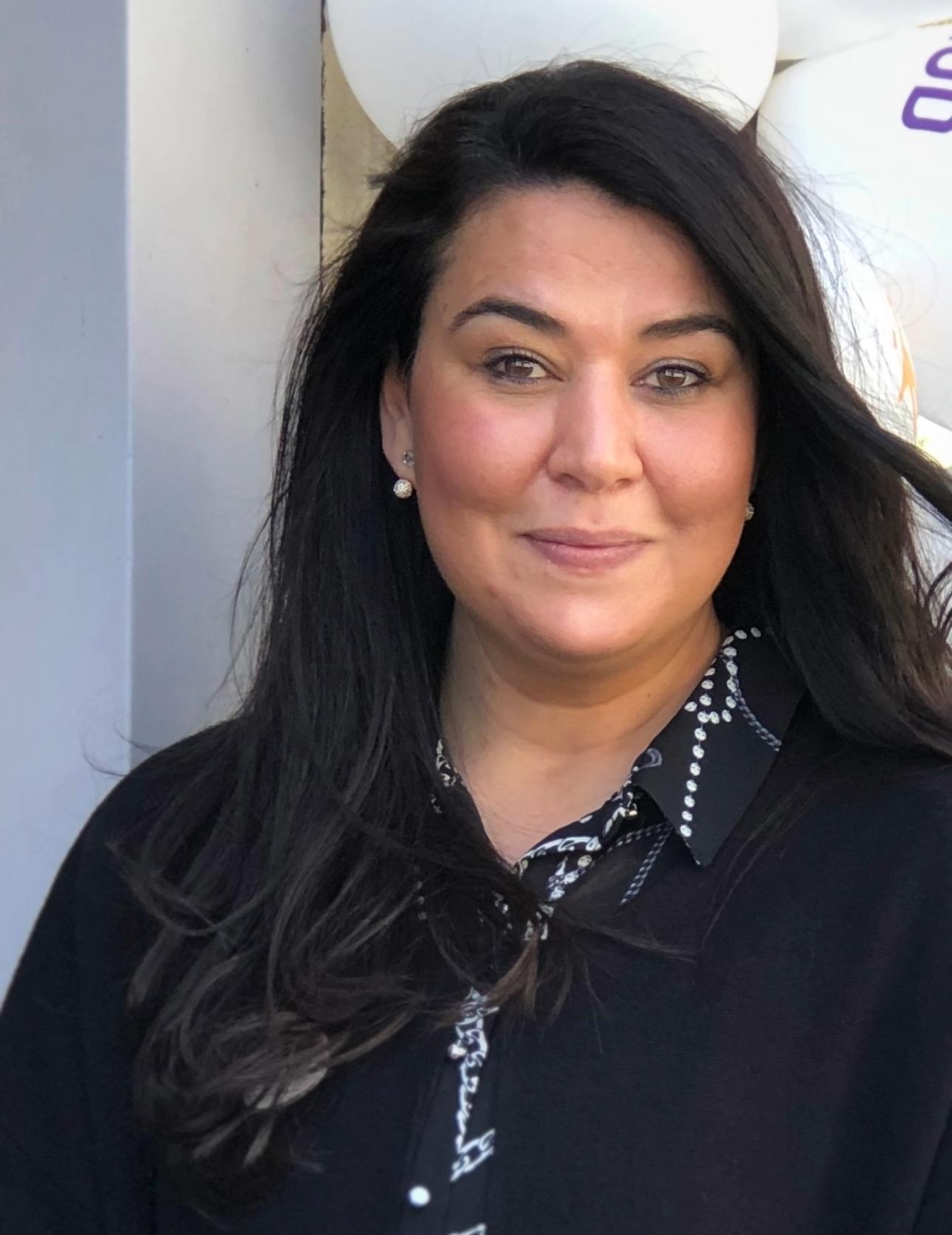
Kadriye Sahin-Ozogul is a wellbeing and activities coordinator for culturally sensitive day care at MIJ, an organisation providing home care and social support in Rotterdam, the Drechtsteden and Amsterdam-Amstelland. She works primarily with older people with Alzheimer’s disease, which is relatively common amongst migrants.
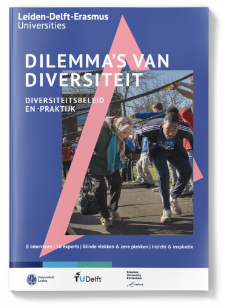
The white paper Dilemmas of Diversity – Diversity Policy and Practice contains eight dialogues between sixteen experts from academia, government and civil society organisations on current issues. The publication is intended for policymakers, administrators, professionals and anyone working on inclusive public services and social participation.
The publication (written in Dutch) is available for download via this link. Would you like to receive a printed copy of the white paper? Send an email to Katja Hoiting from Leiden-Delft-Erasmus Universities alliance: k.hoiting@tudelft.nl