
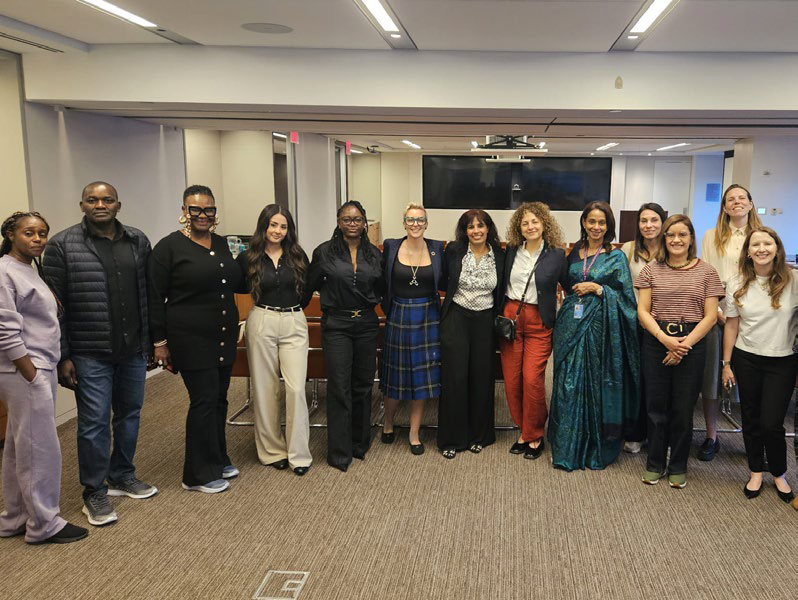
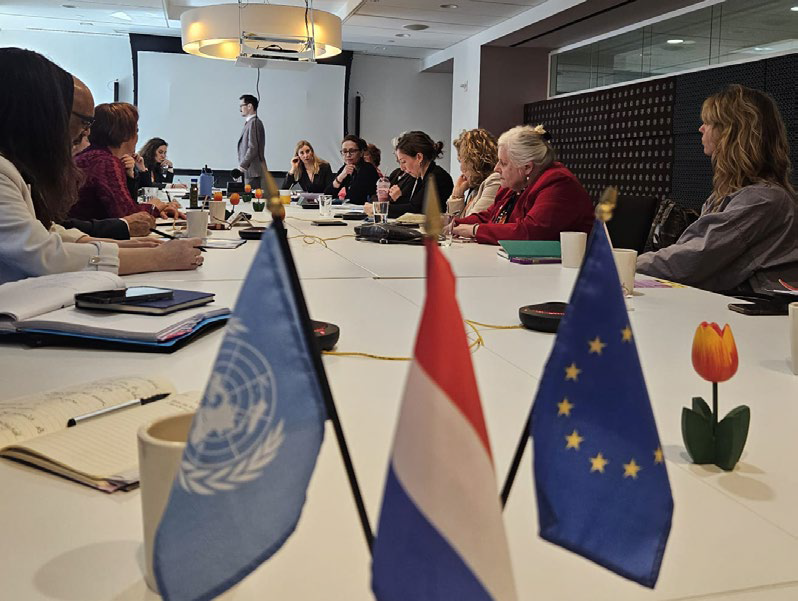
Researchers affiliated with Leiden-Delft-Erasmus Universities attended the UN NGO CSW70 conference in New York in early March, the 70th session of the United Nations Commission on the Status of Women. The conference brought together world leaders, NGOs, and academics to discuss the theme of justice for women and girls in times of multiple crises.
Fátima Delgado Medina and Els Leclercq of the Circular Community Foundation traveled to New York to present the circular community approach to the UN NGO Programme in collaboration with the Nuvoni Centre for Innovation Research. Their participation was made possible in part by LDE and the TU Delft Female Impact Community.
Justice must be built into economic systems
The core message conveyed by the researchers was both simple and demanding: if access to justice for women and girls is a global priority, then that justice must also be embedded in the economic and ecological systems that shape daily life. After all, women’s entrepreneurship often takes place within community contexts, through informal care economies, local stewardship, cooperative labor, and small-scale enterprises. Yet these forms of economic activity are rarely recognized or measured within dominant market and policy logics.
The researchers therefore advocate for a broader conception of value. They argue that circular communities function as place-based ecosystems of regenerative entrepreneurship: they create livelihoods while simultaneously restoring land, strengthening social cohesion, and ensuring cultural continuity. When women are positioned within these communities as leaders, organizers, stewards, creators, and bearers of knowledge, the path to justice becomes concrete and tangible.
The Circular Value Flower as a tool
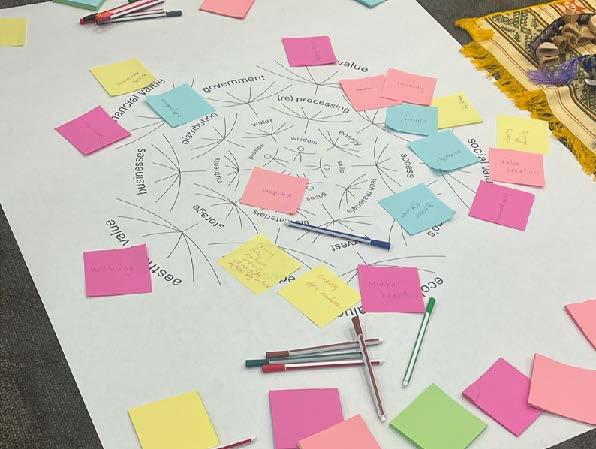
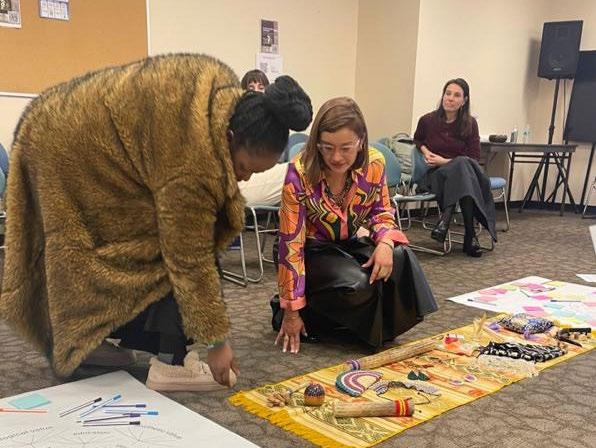
During the session, which consisted of a presentation, a discussion circle, and a ritual space, Delgado Medina and Leclercq introduced the Circular Value Flower (CVF). This design tool helps communities visualize the entire system behind their initiative: ambitions, resource flows, partnerships, spatial interventions, and the multiple values created—ecological, social, cultural, aesthetic, and financial.
The method is rooted in more than five years of field research in circular communities around the world, from Nairobi and the Galápagos Islands to Buenaventura, Bali, and Rotterdam. In all these contexts, initiatives demonstrate how locally rooted practices enable broader transitions toward just and sustainable futures.
 Book and sequel
The findings from this study will soon be compiled into a book, scheduled for release in May 2026, in which fishermen, young people, farmers, indigenous peoples, and local leaders will jointly demonstrate what economic models rooted in land, water, and collective well-being look like in practice.