


Sports bring people together, improve health, and foster connections. Experts Agnes Elling and Kay Mars argue that these are problematic assumptions. The more positive the narrative about sports, the easier it is for structural inequalities to fade from view. “We take one form of difference for granted, while we immediately view another as sensitive or suspicious.” By Floris Rietveld
Everyone should be able to participate in sports, but how do you translate that into effective policy?
Kay Mars: “In policy, you often see a tension between generic policy and policies targeting specific groups.” Generic policy means that, in principle, everyone can participate. So, sports are for everyone; the offerings are open, and everyone is welcome. That sounds logical, but the risk is that you no longer see which groups face additional barriers.”
Agnes Elling: “That’s precisely why you sometimes need target-group policies. Measures that address specific barriers. Think of adapted sports programs for people with disabilities or activities that take financial or social barriers into account. The problem isn’t that target-group policies are wrong. The problem arises when policy either becomes too generic and obscures inequality, or becomes so specific that people are pigeonholed into stereotypical categories.”
Does policy targeting specific groups always work?
Mars: “In my research, I’ve noticed that sports policy focuses heavily on what I’ll call the ‘easy’ forms of diversity: children, older adults, and people with physical disabilities. Policymakers feel confident in steering efforts very specifically toward these groups. When it comes to religion, ethnicity, or sexuality, you see a much quicker shift back to generic language. These topics are more sensitive. Suddenly, the talk turns to ‘sports for everyone,’ a ‘positive sports environment,’ or ‘participating together.’ This causes the specific inequalities to fade from view.”
Elling: “You see that in policy language as well. Terms like “positive sports environment” or “sports for everyone” sound appealing, but they can also obscure what the discussion should really be about. Think of discrimination, racism, or hatred toward queer people. Of course, everyone wants a positive sports environment. But if you don’t also explicitly address anti-discrimination, you’re pretending that problem doesn’t exist.’
Don't make policy just about people, but with people”
Which policies, for example, are intended to promote inclusion but actually lead to exclusion?
Mars: “A clear example from my research is women’s swimming in The Hague. This is a neighborhood initiative intended to revive women’s swimming, which used to be very common. Some local politicians and officials, precisely because of the multicultural context, dismissed this swimming session as something intended for one specific group: Orthodox Muslim women. They presented it as a prime example of failed multicultural policy. Yet women’s swimming is quite normal in many places in the Netherlands and is attended by many different women.”
“This is where paternalism arises: policymakers and politicians assume who such a program is intended for and what those women supposedly need. In the case of women’s swimming, a racist and ethnic element is also woven into this: white and predominantly male policymakers who reduce women’s swimming to something intended solely for Orthodox Muslim women. They then advocate for coed swimming because that would supposedly promote the ‘integration’ and ‘emancipation’ of these women. Yet the organizers or the users themselves often have a much broader group in mind. And even if women’s swimming were primarily for Muslim women, why would that be a bad thing? After all, there are often separate swimming hours for other groups as well, such as seniors or parents with young children.’
What's wrong with women's swimming sessions being primarily for Muslim women?”
Do you see this kind of paternalism more often in sports?
Elling: “In some sports, we consider separate groups to be perfectly normal, such as programs specifically for people with disabilities or college sports. But separate swimming hours for women are quickly seen as exclusionary, especially if there’s an association with Islam. Yet making sports more accessible to underrepresented groups is one of the core principles of sports promotion policy. And in doing so, we shouldn’t impose too many conditions, but rather tailor our approach to what those specific groups need. That shows just how normative policy really is: we take one form of difference for granted, while immediately viewing another as sensitive or suspicious.”
Where does the reality on paper clash most sharply with reality in practice?
Elling: “On paper, sports are often, by definition, a good thing. We’ve seen this for decades: sports are automatically assumed to be healthy, unifying, and empowering. But in practice, that’s far less self-evident. Sports can bring people together. But sports can also exclude, humiliate, or reinforce existing hierarchies. In the locker room, in the stands, or in the boardroom, racist jokes, jokes about queer people, or sexism can be very persistent.”
Mars: “Precisely because sports are so often portrayed as fun, healthy, and positive, it becomes difficult to talk about its dark sides as well. That positive image sometimes actually exacerbates the problem. It makes it seem as though we shouldn’t take it too seriously, even though exclusion is definitely happening.”
If you don’t call out discrimination, you’re pretending the problem doesn’t exist.”
You also mention intersectionality. What does that mean, specifically, for sports policy?
Mars: “Intersectionality is a way of looking at inequality. A person can face multiple forms of inequality at the same time, based on, for example, gender, ethnicity, age, or disability. You can’t understand or address these overlapping and interrelated forms of inequality in isolation from one another. So intersectional policy means not treating a target group as if it were a single homogeneous group. You can certainly have LGBTI+ policies, but they shouldn’t implicitly cater only to white, highly educated middle-class people. Even within such a group, there are differences in, for example, class, migration background, or disability. The same applies to policies for people with disabilities: other forms of inequality come into play there as well.”
Elling: “In concrete terms, it means: continuing to see people first and foremost as human beings, realizing that they never belong to just one group. Everyone occupies a position across all dimensions. Depending on the context, this can result in multiple forms of inclusion—someone with seven checkmarks—or multiple barriers or exclusions, such as a woman with an immigrant background, limited financial resources, and young children. At the same time, you have to be careful not to create new categories or a hierarchy of exclusion.”
Incorporate knowledge about inclusion and diversity into sports education programs”
What can policymakers and organizations start doing differently starting today?
Mars: “Don’t wait for the perfect plan; just get started. Of course, work together with the people it affects. In Groningen, I heard from members of an inclusion team: ‘We’re just going to get to work at the sports complex and see what challenges we run into.’” You can’t fully map out inclusion on paper in advance. And perhaps most importantly: don’t make policy just about people, but with people. Involve the various target groups you have in mind in developing policy. Make room for experiences, expertise, and stories that might not fit so easily into the system or the world of policy. And put equality at the heart of any partnerships you enter into.’
Elling: “My advice: stop with one-off projects. Many good initiatives disappear as soon as the grant or the driving force behind them is gone. This kind of change, in particular, happens slowly and in small steps. So you need staying power, national support, and people with expertise and experience in municipalities and organizations who can keep the issue on the agenda. In addition, professionalization needs to improve. Community sports coaches, trainers, and sports professionals still learn too little about inclusion and diversity during their training. They often have to improvise in practice. If you want accessibility to improve not only physically but also socially and financially, then that knowledge needs to be systematically integrated into training programs and organizations.’
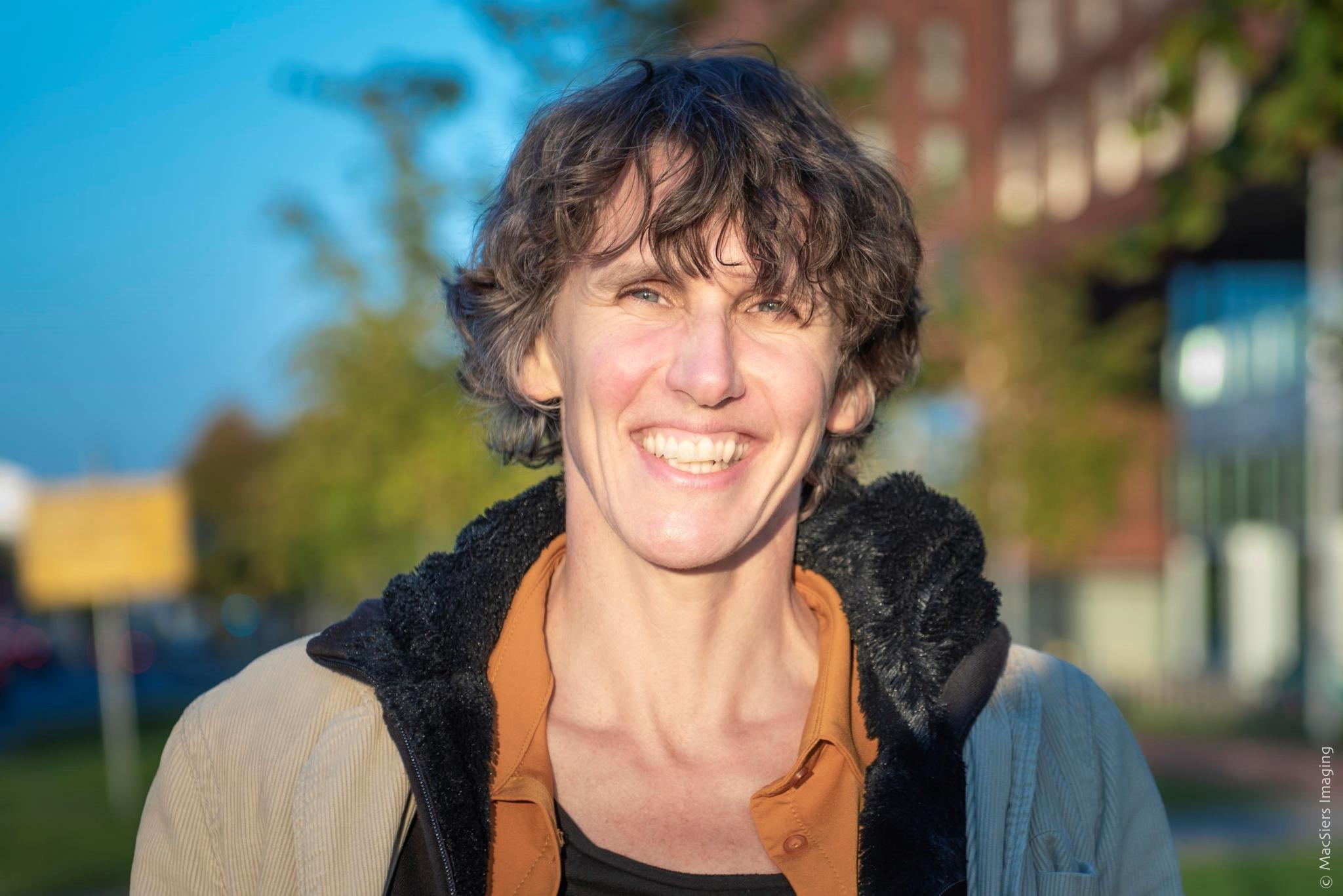 Agnes Elling is the cluster head of Participation, Inclusion/Diversity, and Sports Culture, and a senior researcher at the Mulier Institute, which studies the intersection of sports, society, and policy. She researches social inequality in and through sports, with a special focus on gender, ethnicity, sexual diversity, and how these inequalities intersect.
Ka y Mars is a Ph.D. candidate at Erasmus University Rotterdam within the NWA program “Dilemmas of Doing Diversity” (DiDi). He investigates how diversity and inclusion policies in sports and recreation work in practice, and where well-intentioned policies can actually lead to new forms of exclusion.
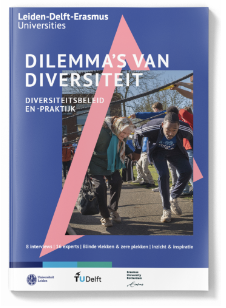
The white paper Dilemmas of Diversity – Diversity Policy and Practice contains eight dialogues between sixteen experts from academia, government and civil society organisations on current issues. The publication is intended for policymakers, administrators, professionals, and anyone working on inclusive public services and social participation.
The publication (written in Dutch) is available for download via this link. Would you like to receive a printed copy of the white paper? Send an email to Katja Hoiting from Leiden-Delft-Erasmus Universities alliance: k.hoiting@tudelft.nl.
