
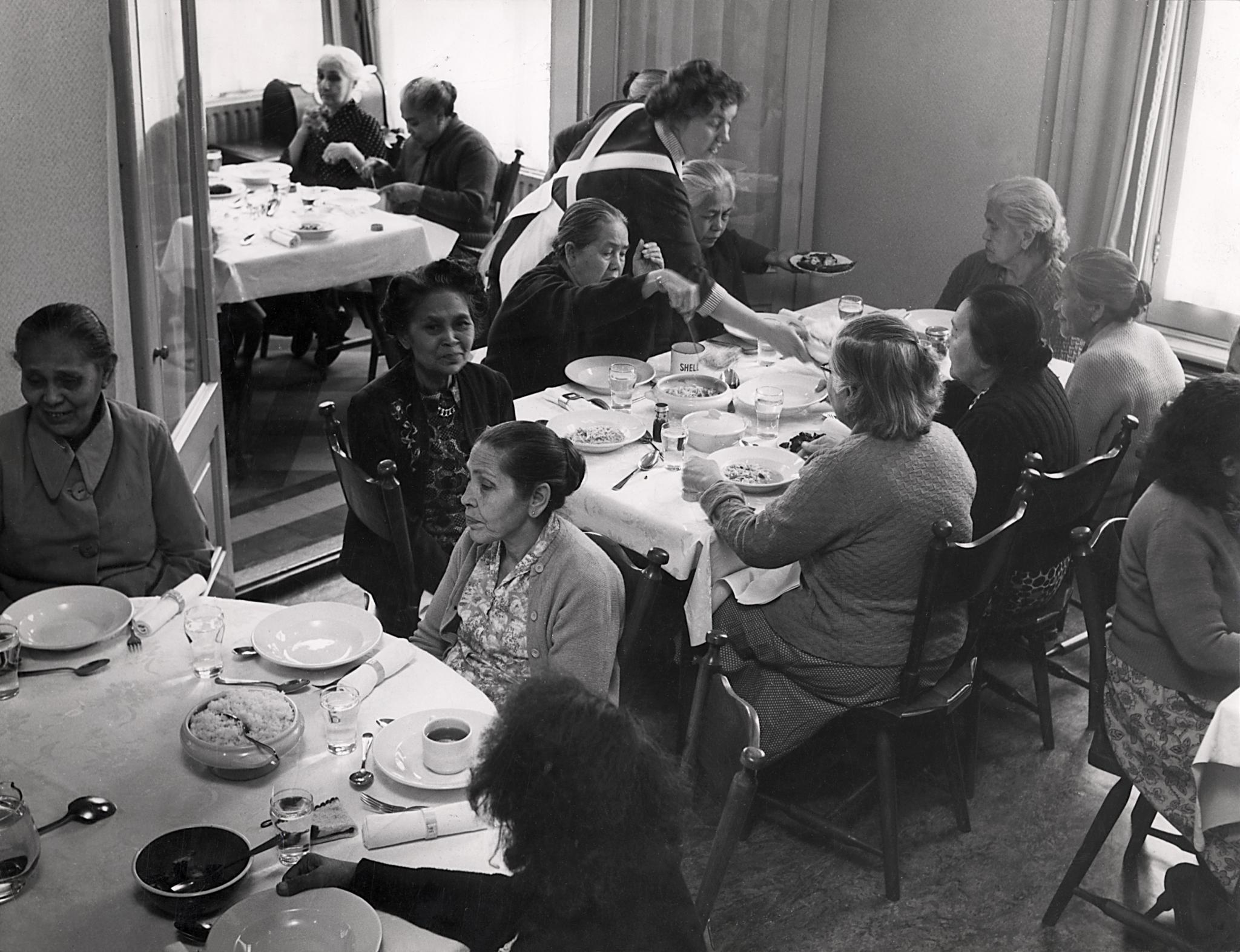
When elders in healthcare are able to practise and pass on the traditions and rituals of their culture to younger generations, it brings great benefits. This is the view of Thérese Nleng from the Network of Organisations for Older Migrants. Researcher Lara Fizaine says: ‘In the colonial past, rituals and traditions were not tolerated.’ By Nynke van Spiegel
What does culture-specific care mean to you?
Thérese Nleng: ‘To put it very simply: if someone from a different cultural background goes to the doctor and says, “My leg hurts”, they might actually be referring specifically to pain in their little toe. This requires the healthcare provider to ask follow-up questions, and if they don’t, misunderstandings arise. This is about culture-specific language and context, and much more attention should be paid to this.’
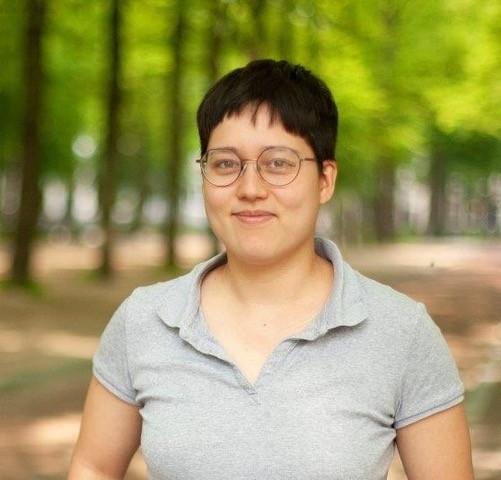
Lara Fizaine: ‘I prefer to call it group-specific care. In my research, I’ve looked closely at the word “culture” and how its use can sometimes be problematic. When you talk about culture, for example, you’re referring to eating habits or spiritual needs.
‘For patients with a migrant background, it’s about more than just care needs arising from their cultural background. It’s about access to care, about systems and structures within which they cannot find their way, because, for example, they don’t speak the language or don’t know where to ask for help. Or, conversely, the system cannot adapt to make itself accessible to these groups.’
Is there a difference here between the older and younger generations?
Nleng: ‘I always refer to the older generation as the “silent sufferers”. In most cultures or communities, you see that older people find it difficult to say they are experiencing certain symptoms. They don’t want to be a burden on the generations below them. In contrast, the younger generati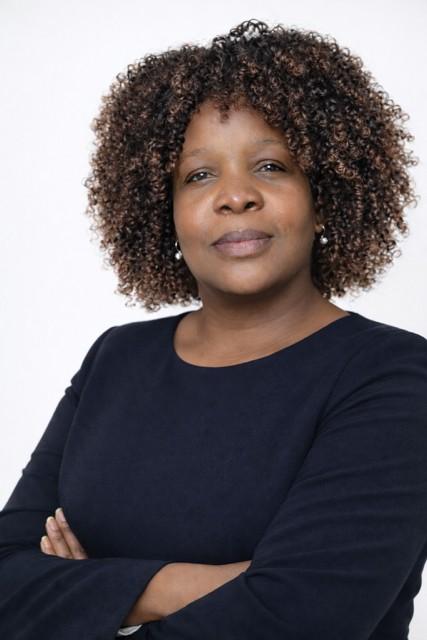 on – the internet generation – has already looked up what’s going on before they visit their GP.
‘The generation in between – aged 35 to 55 – we call the bridge generation. They play a very different role. On the one hand, they are familiar with the rituals and traditions carried over by that first generation, but they find it difficult to relate to them because they have become westernised. This also plays a part in their informal caregiving. They look after both their parents and their children and, through these roles, often forming the bridge to the Dutch care system.’
I always refer to the older generation as the “silent sufferers”’
What role could you play in this as a care organisation?
Nleng: ‘There is very little scope for the traditions and rituals of different cultures within the mainstream care system. Occasionally, there are spiritual counsellors who can play a role in this. That makes it difficult for the bridge generation. They constantly have to reconcile the requirements of the mainstream healthcare system with the wishes and feelings of their parents. There should be more scope for those needs.’
Fizaine: ‘Exactly. A great deal is expected of those who are able to adapt – what you call the bridge generation – but this also applies, for example, to older Surinamese migrants, who learnt Dutch at a young age and are more familiar with what we would call Dutch culture. Organisations are quick to assume they don’t need to do anything for this group. Yet this group sometimes also needs, for example, a different kind of food, a different language or different music.’
There must be room in the healthcare sector for people who don’t speak the language’
How do you ensure that the needs of these different groups and generations are met?
Nleng: ‘The solution also lies partly with the community itself. Above all, we try to provide space for the first generation to pass on traditions and rituals at gatherings where different generations come together. We call this “Wisdom without barriers”. If that generation fails to pass on that wisdom, you notice that the bridge generation ends up in a sort of identity crisis. It is difficult for them to relate to what has been passed down through their ancestral lines, whilst they find themselves in the midst of a society where different norms apply.
‘In the generation below them – the young people – you see a restlessness that sometimes manifests itself in aggressive behaviour. We are therefore noticing that grandparents and grandchildren are developing a different bond with one another, in which wisdom and traditions are passed on more consciously. So, as an organisation, do not hesitate to make space for the wisdom, rituals and traditions that are an integral part of the identity of patients and their families.’
But first, you need to know what the needs are. How do you find that out?
Fizaine: ‘I did fieldwork at a day centre for older people, mainly from a Ghanaian background, but where everyone is welcome. Akwaaba Zorg in Amsterdam. Every day, before the day centre opens, there is a free drop-in consultation hour to get help, particularly with the paperwork involved in applying for a place at the day centre. That’s a good example of how you can meet a need that exists among various groups with a migrant background, but also, for example, among Dutch older people. If you don’t speak the language well, or if you lack digital skills, it’s actually a lot of work just to apply for a Wmo grant.’
There is a free drop-in consultation every day where you can get help’
Where else can you look for solutions?
Fizaine: ‘In healthcare, we need to focus much more on the root of the problem – such as not speaking the language, being unwilling or unable to ask for help, and access to care. And we need to look for solutions tailored to those specific groups. I would even go so far as to argue that a person who doesn’t know the language shouldn’t be seen as the problem. In healthcare, there must be room for people who don’t know the language. That’s a different approach to the problem, isn’t it?’
Nleng: ‘We’re conducting a lot of research into how we can identify these requests for help through certain key individuals. We advocate for the role of intercultural bridge-builders – people who understand the policy side of the healthcare system, but also grasp the healthcare needs of migrant communities. We also work with ‘wisdom guides’, people who take on a mentoring role. They are at the heart of the community and know exactly who is experiencing which symptoms and who is reluctant to see their GP. When, as a healthcare provider, you know which key person you need, and dare to make space within the healthcare system for these roles and treat them as equals, I believe you can meet a variety of needs.’
We also work with wisdom guides as mentors; they are at the heart of the community’
How can we build greater support for culturally sensitive care?
Fizaine: ‘We should pay more attention to the root cause of difference: how did this inequality come about in the first place? To understand that, we need to look back at the colonial past.’
Nleng: ‘I agree. Even matters such as spiritual wisdom have their origins in the colonial past. At the time, rituals and traditions were not tolerated. As a result, generations before us kept their spiritual wisdom hidden, causing us to lose touch with it. I am referring specifically to the descendants of those who were enslaved. It is also important to address discrimination and prejudice directed against Asian Dutch people and Dutch Muslims. We must link the past to the present and the future.’
Lara Fizaine studied Social Policy and Public Health and is conducting PhD research at Leyden Academy into diversity policies and practices in elderly care. She is also a visiting researcher at the Netherlands Interdisciplinary Demographic Institute (NIDI) and Erasmus University Rotterdam.
Thérese Nleng is the national coordinator at Netwerk NOOM (Network for Organisations of Older Migrants). The network works to improve the (income) situation and well-being of the rapidly growing and highly diverse group of older migrants in the Netherlands.
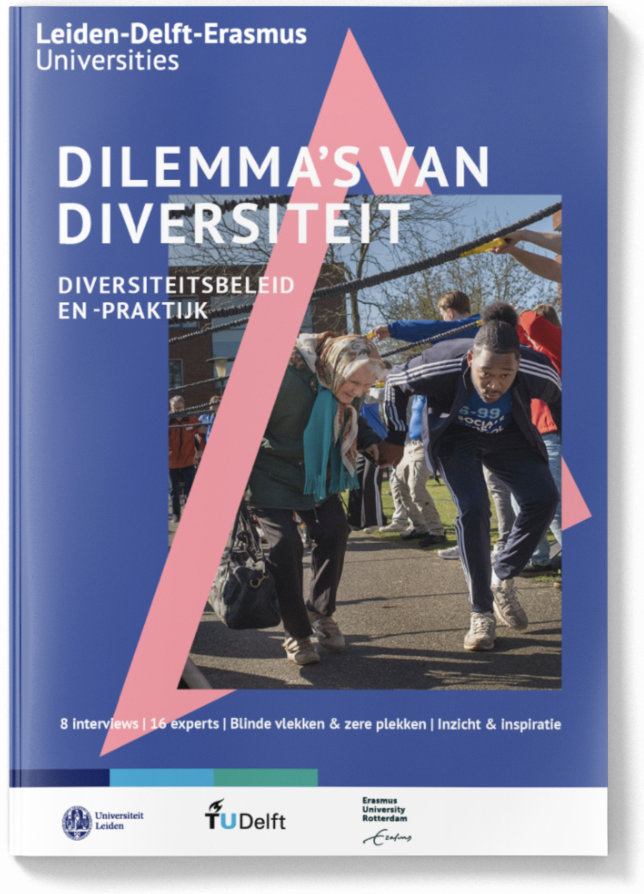
The white paper Dilemmas of Diversity – Diversity Policy and Practice contains eight dialogues between sixteen experts from academia, government and civil society organisations on current issues. The publication is intended for policymakers, administrators, professionals and anyone working on inclusive public services and social participation.
The publication (written in Dutch) is available for download via this link. Would you like to receive a printed copy of the white paper? Send an email to Katja Hoiting from Leiden-Delft-Erasmus Universities alliance: k.hoiting@tudelft.nl