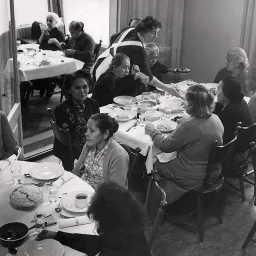


Ira van der Zaal works at the Ministry of Justice and Security with her knowledge team to underpin migration policy with facts and figures. Like historian Marlou Schrover, who specialises in migration and diversity, she strives to ensure that knowledge guides policy. By Rianne Lindhout
What does your Strategy and Engagement team do?
Ira van der Zaal: ‘We collect, interpret and share knowledge with policy officials. We help to underpin policy with facts and figures from academic research. We monitor academic developments and can commission research via the WODC (Scientific Research and Data Centre or Knowledge Institute for the Rule of Law, ed.). We can also seek advice from the Migration Advisory Council. And we collaborate with the Clingendael Institute on a knowledge portal containing information from, for example, literature reviews and figures on housing for migrants. It is then up to our policy colleagues to decide how to use that knowledge.’
Why wouldn’t a policy official base policy advice on this kind of knowledge?
Van der Zaal: ‘It’s not a question of unwillingness. Policy advisers operate in a political and dynamic environment. Circumstances can change rapidly. Sometimes the right knowledge isn’t available, and there isn’t time to carry out thorough research either, because that simply takes time. But our colleagues make the most of our knowledge wherever possible.’
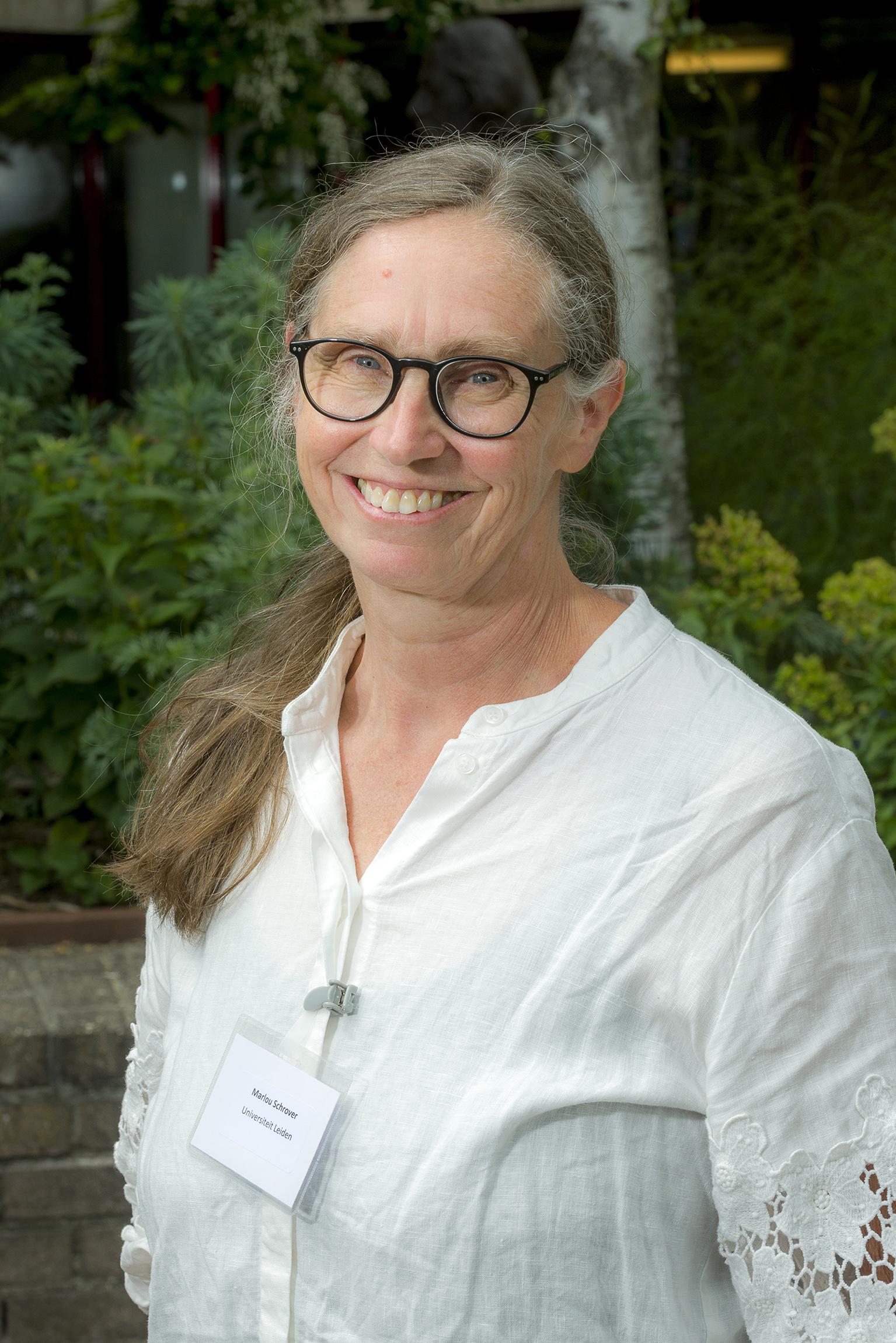
Marlou Schrover: ‘I am chair of the WODC committee investigating the reasons why Ukrainians do or do not return to their home country. Based on the literature, you can draw up a list: for example, health, age, length of stay, family circumstances and the situation in their home country can all determine whether someone wants to return. The Donbas has been devastated and the children are attending school here, so probably seventy per cent will not return. But that is a message that is politically sensitive.’
Does that put you in a difficult balancing act between facts and politics?
Van der Zaal: ‘We do not censor ourselves, but we do, of course, take into account political wishes and agreements set out in the coalition agreement. Policy advisers propose measures, each with their own pros and cons. It is a step forward that policy recommendations within the government are now made public.’
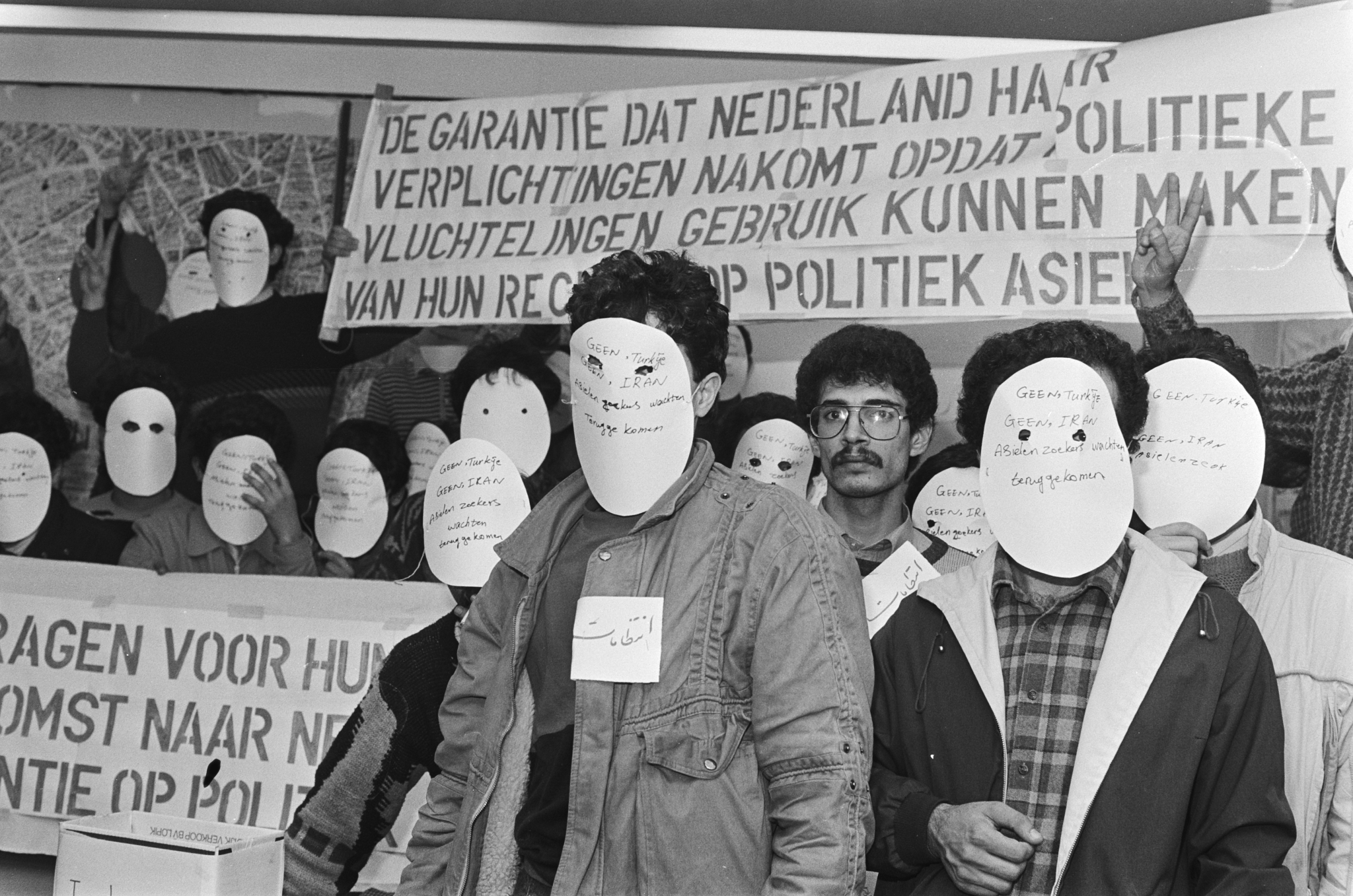
Schrover: ‘As a historian, I sometimes find that government ministers lack a sense of history. There is talk of encouraging the return of asylum seekers by offering financial incentives. PvdA State Secretary Aad Kosto tried that too in the late 1980s and early 1990s. It didn’t work. Surely we should learn from that? It is astonishing that it is being proposed again.’
Return incentives didn’t work. It’s astonishing that they’re being proposed again.’
Could you give an example of how a policy recommendation is developed?
Van der Zaal: ‘In our capacity as knowledge providers, we are increasingly working with scenarios. This can be done using what is known as an archetypal scenario. Imagine an X-axis and a Y-axis with two major uncertainties plotted on them, for example, the security situation in a country and the refugees’ intention to stay (high or low) from that country.
‘In the four quadrants, you then see four possible futures: for example, the country remains unsafe and few people intend to return. Or the country becomes safe, but the refugees still prefer not to return. Based on this scenario, policy advisers can devise measures and courses of action to prepare for the four – or at least the most likely – futures. Sometimes this leads to what are known as ‘no-regret’ measures. These are measures that are useful for all or several scenarios and have no adverse effects.’
Is it possible to predict the future by imagining it?
Schrover: ‘Scenarios exist partly to build support and reach consensus. In the past, they often turned out not to be very realistic, which is why I’m somewhat critical of creating these scenarios, which require a great deal of time and manpower. Based on experience and the literature, we know which factors are important. Extreme scenarios are not very likely.’
How do you view the political reality surrounding migration?
Schrover: ‘It’s a real thorn in my side that the focus is always on asylum, when that accounts for only a small proportion of all immigration. The impression is being given that asylum seekers are the cause of many problems in society, such as the housing shortage. But these problems would not suddenly be solved if the influx of asylum seekers were to drop to zero.
‘It never ceases to amaze me. A whole host of experts have appeared before the Senate. The IND (Immigration and Naturalisation Service, ed.) emphasises time and again that a two-tier system for refugees – i.e., those who have fled war or natural disasters, or those personally persecuted on grounds such as sexual orientation or activism – is not workable. No one is listening; even D66 and the CDA want to introduce it.’
Within the ministry and in the media – each in your own role – you try to ensure that knowledge guides policy. Is that frustrating?
Marlou Schrover: ‘My driving force is that I do hope they will listen. In the 2023 party manifestos, the focus on migration was mainly on asylum. In the 2025 manifestos, there was already much greater interest in labour migration. The GroenLinks-PvdA party manifesto – now known as Pro – reflected the recommendations of the Roemer Commission and the FNV trade union regarding abuses in labour migration. ‘Great,’ I thought, ‘they’ve taken note!’
Van der Zaal: ‘The House of Representatives is also holding more and more briefings with experts. It’s a slow process, but I can see the effects starting to trickle through.’ Schrover: ‘I once took part in a fact-checking group during an election debate. We had to speak up immediately if a statement was incorrect. Tough job! And I was invited to give a talk at the JOVD. It was good to see them stepping outside their bubble, although you can’t expect a single talk to change everything.’
The House of Representatives is holding briefings with experts with increasing frequency'
It often does look as though politicians lack knowledge or are ignoring it. Do politicians refuse to tell the honest story, for fear of the voters?
Schrover: ‘Politicians do know the figures. Don’t underestimate the role of the media either. Since the 1990s, competition in the media has increased significantly, and following the murder of Pim Fortuyn in 2002, there was a shift from experts, politicians and policymakers towards the man in the street, who is allowed to have his say with just as much authority. These typical vox pops act as an echo chamber for the right, because the media focus on stories that stand out. As a result, nuanced opinions often remain overlooked.’
Van der Zaal: ‘The media pay a disproportionate amount of attention to the negative.’ Schrover: ‘In Grave, Brabant, it was decided to keep the asylum seekers’ centre open until 2055; only one journalist wrote about it. But a whole host of journalists turn up when people shout: “Get rid of the asylum seekers’ centre!”’ When I appear on a talk show, the journalists say: ‘It’s nice when there’s a bit of discussion.’ But that shouldn’t be about whether it’s raining or not, because the facts are clear. We can, however, have a discussion about opinions. That doesn’t always go down well in the media.’
The media focus disproportionately on the negative’
Were things better in the past? Was the Netherlands ever a welcoming country?
Schrover: ‘In 1945, nine million displaced people were living in former concentration camps across Europe, mainly in Germany. The Netherlands was asked to take people in. But there was a housing shortage, and Prime Minister Drees felt that the Netherlands, with its population of ten million, was already full. In the end, eight thousand people were allowed to come. Four thousand actually arrived, and of those, a thousand returned to the camps because they did not feel welcome here.’
In 1945, Prime Minister Drees found that the Netherlands was also full’
text: Rianne Lindhout
Marlou Schrover is Professor Emeritus of Economic and Social History, with a particular interest in migration and diversity, and the relationship between the media and policy. She is also LDE Professor at Erasmus University Rotterdam and leads the NWA project ‘Dilemmas of Doing Diversity’.
Lawyer, Ira van der Zaal, is the team leader for Strategy and Engagement at the Ministry of Justice and Security. Her team bridges the gap between policy and (academic) knowledge and monitors migration trends and developments. Among other roles, she also served as a migration policy adviser for eight years.
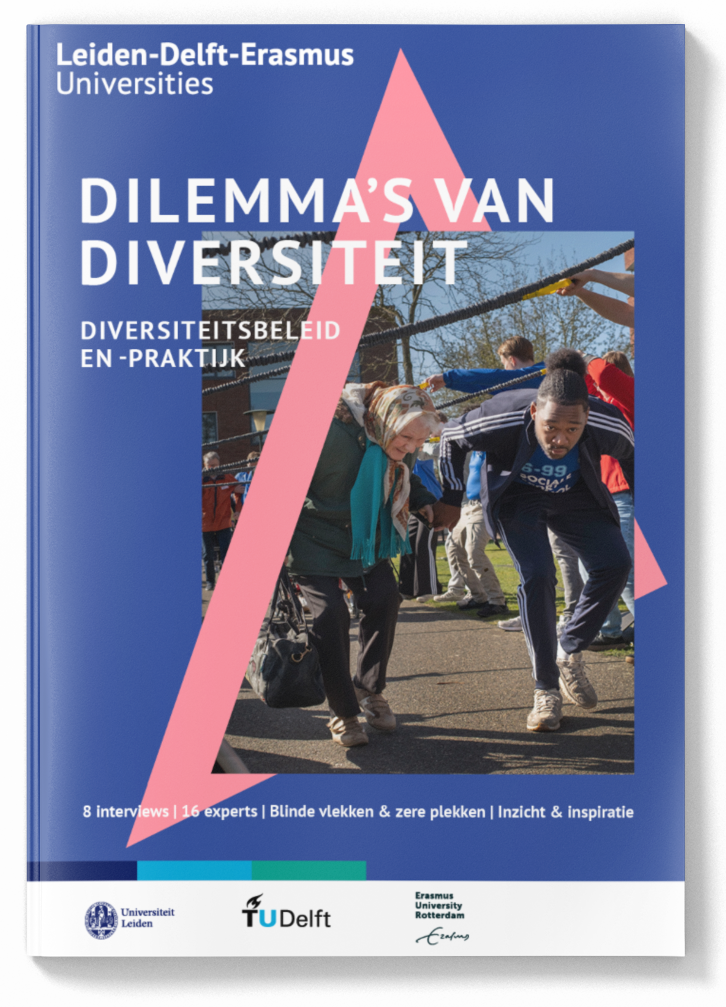
The white paper Dilemmas of Diversity – Diversity Policy and Practice contains eight dialogues between sixteen experts from academia, government and civil society organisations on current issues. The publication is intended for policymakers, administrators, professionals and anyone working on inclusive public services and social participation.
The publication (written in Dutch) is available for download via this link. Would you like to receive a printed copy of the white paper? Send an email to Katja Hoiting from Leiden-Delft-Erasmus Universities alliance: k.hoiting@tudelft.nl