
The year 2025 marked a period of significant growth for the LDE East Africa (LEARN) community. What began as a collaborative initiative has evolved into a robust, multi-country research network connecting institutions and individuals across the Netherlands and Africa. Throughout the year, our focus remained clear: fostering impactful research by actively connecting researchers to partners, resources, and opportunities — and by ensuring that knowledge flows both ways between academia and communities.
Research: The Nairobi River as a Driver for Circular Communities
In 2025, LDE Global funded the project “The Nairobi River as a Driver for Circular Communities – an Urgent Call for Climate Adaptivity and Social Resilience.”
This initiative centered on community-led efforts along the rivers of Nairobi, where local groups are actively regenerating ecosystems while strengthening social cohesion. By examining grassroots circular practices from waste recovery to river clean-ups the project demonstrated how environmental restoration and community resilience go hand in hand.
Through close collaboration with community initiatives, researchers highlighted how circularity is already embedded in local practice not as an imported concept, but as lived experience and collective action.
Knowledge Sharing: Connecting Cities, Ideas and Practice
Cross-City Policy Dialogue Series
Under the LEARN network, two high-impact webinars were convened as part of the ongoing Policy Dialogue Series, bringing together urban practitioners, scholars, and policymakers.
1. Mainstreaming Indigenous Nature-Based Solutions in African Urban Practice
Drawing on cases from Kenya, Rwanda, South Africa, Ethiopia, and Europe, this dialogue emphasized:
- Indigenous nature-based solutions (NbS) have long existed in Africa through sophisticated socio-ecological systems.
- Reframing these practices as “new” risks erasing local expertise.
- Financing models that prioritize large-scale, bankable projects can reproduce colonial dynamics.
- Planning systems often privilege engineering solutions over community-driven approaches.
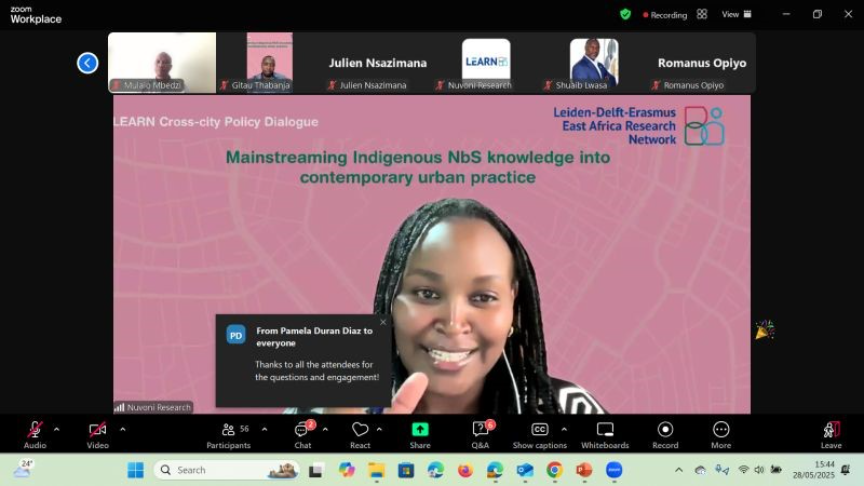
The session was moderated by Bosibori Barake, Urban Program Coordinator at Nuvoni Centre for Innovation Research.
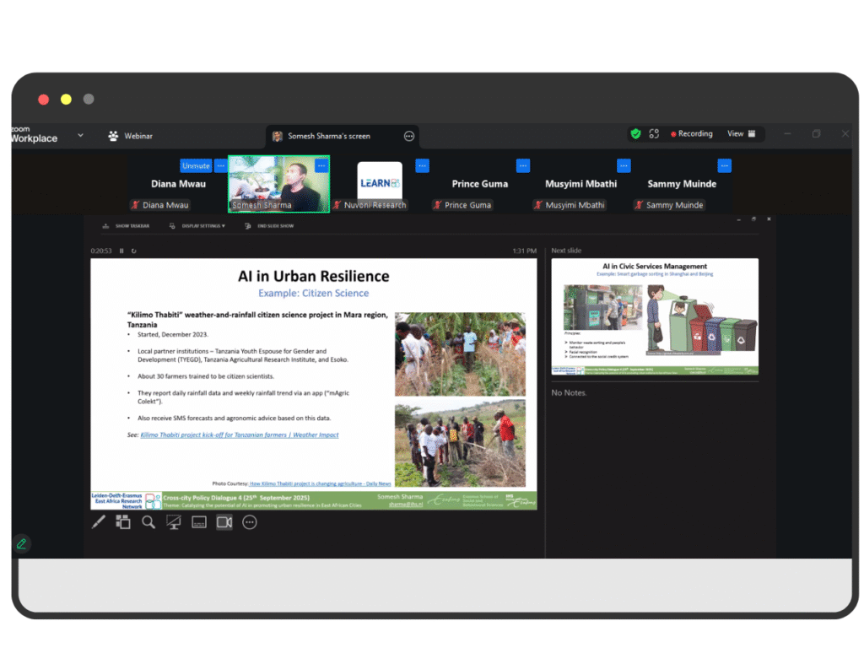
2. Artificial Intelligence for Urban Resilience in East African Cities
Featuring keynote speaker Dr. Somesh Sharma, this session explored both the promise and the risks of AI in African urban contexts.
The central insight was clear: AI is not merely a technological tool it is a connector of people, data, and decision-making processes.
Concrete examples included:
- Real-time flood prediction models supporting early warning systems
- Geospatial AI mapping informal settlements to improve service delivery
- Infrastructure monitoring systems for bridges and roads
- AI-supported chatbots amplifying community feedback
Together, these dialogues reinforced the importance of combining technological innovation with community-centered approaches.
International Visibility: SPACE Conference 2025
On 5 June 2025, the Nuvoni team presented at the SPACE Studies of Planning and Architecture International Conference on Sustainable Architecture, Planning and Urban Design.
Their paper, “Grassroots Circular Initiatives: Exploring Community-Led Waste Management and Value Creation Along the Nairobi River,” was presented under the theme Circular Urbanism: Pathways to Sustainable Development.
The research critically analyzed four circular initiatives along the Nairobi River, demonstrating how communities in semi-formal areas reclaim dumpsites, organize weekly clean-ups, and transform neglected spaces into community parks.
The key takeaway:
When local knowledge, adaptive systems, and inclusive planning align, transformation is not only possible it is already happening.
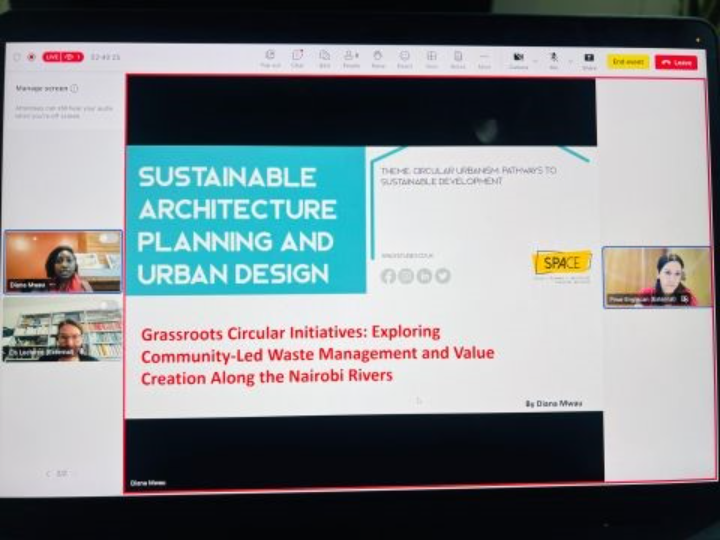
Diana Mwau-Research Assistant Nuvoni presenting at the SPACE conference.
Education: Training the Next Generation of Urban Researchers
Education remained central to LDE’s mission in 2025, with a strong emphasis on immersive, collaborative learning.
Delft Minor Program
LEARN continued its engagement with the Minor program at Delft University of Technology, hosting students in Nairobi for field-based learning.
Students participated in:
- Community clean-ups in the Lucky Summer neighborhood
- Co-creation workshops with circular initiatives along the Nairobi River
- Community validation workshops in Babadogo
- Exchanges with local groups such as Easy Urban Green Growers
- External video URL
This hands-on experience deepened students’ understanding of urban resilience, circularity, and participatory research. A video documentation of the 2025 cohort experience is available on Youtube.
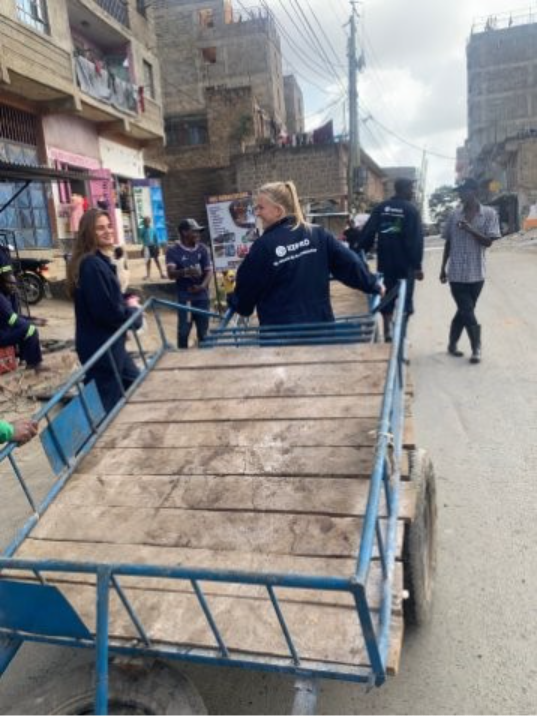
Delft students taking part in a community cleanup in Luckysummer neighborhood, Nairobi.
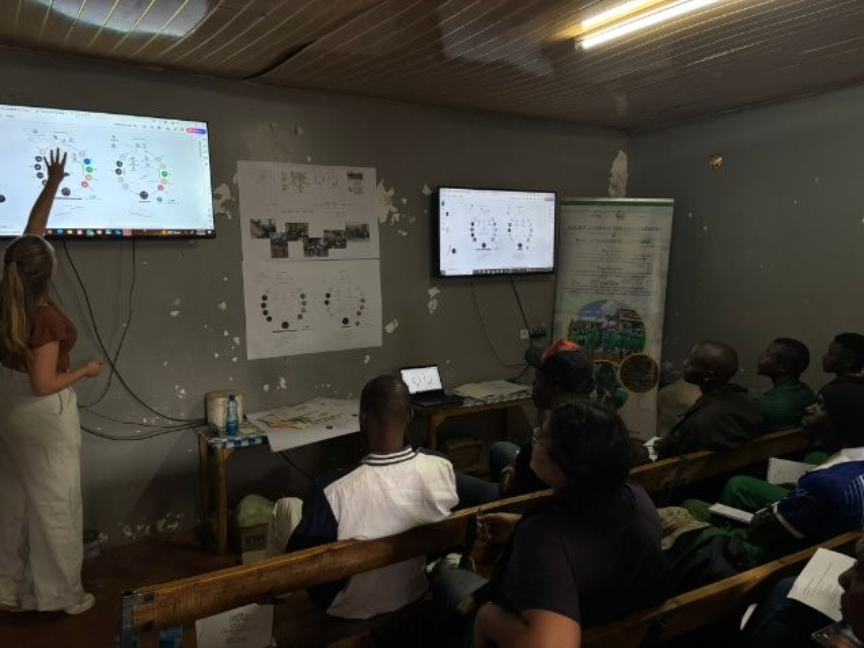
Community co-creation workshop with Circular Initiatives along Nairobi River
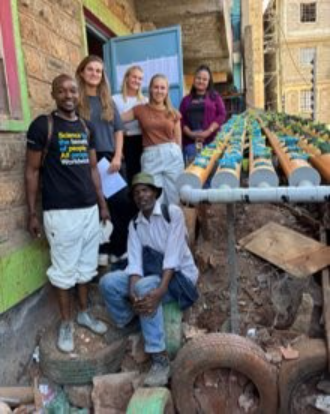
Minors with Easy Urban Green Growers Group
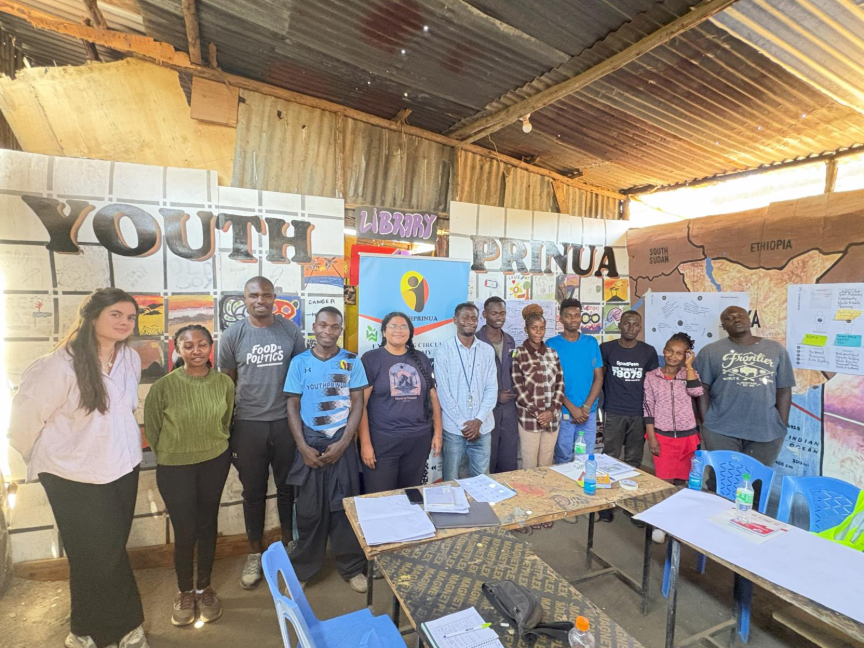
Community Validation workshop at Youthprinua Initiative in Babadogo, Nairobi
Master’s Thesis Lab – Cohort 1
2025 marked the successful completion of the inaugural LEARN Master’s Thesis Lab.
Participants:
Nine students from the University of Nairobi, Dedan Kimathi University of Technology, and the LDE universities.
Research Themes:
- Disaster risk management
- Clean cooking
- Energy planning in informal settlements
Beyond academic theses, students translated their findings into accessible knowledge products including policy briefs, community briefs, training toolkits, and infographics ensuring broader societal impact.
Fieldwork took place across Kenya, including Kamatira, Babadogo, and Kajiado, reflecting a strong commitment to grounded, context-sensitive research.
A comprehensive reflection on the Thesis Lab Seminar Week is available here
Below are some of the student’s fieldwork activities across Kenya.
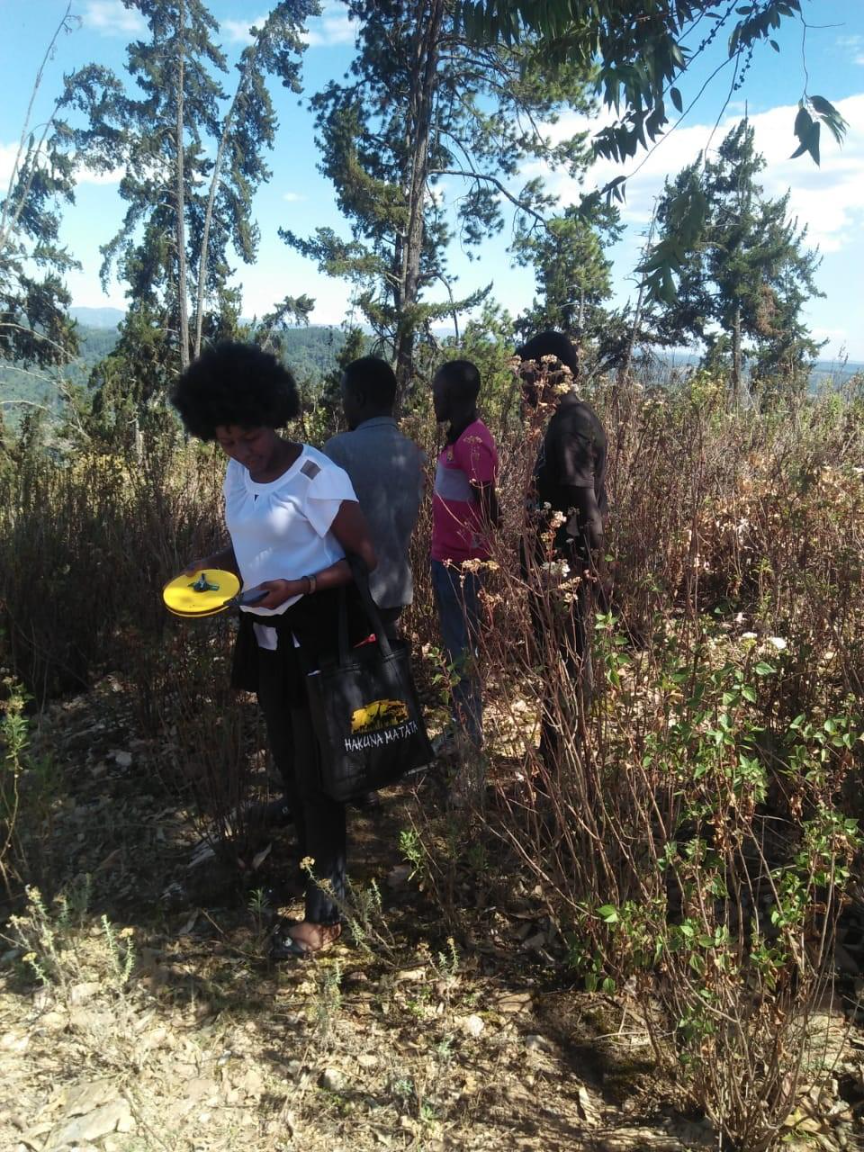
Irene Chesang in Kamatira
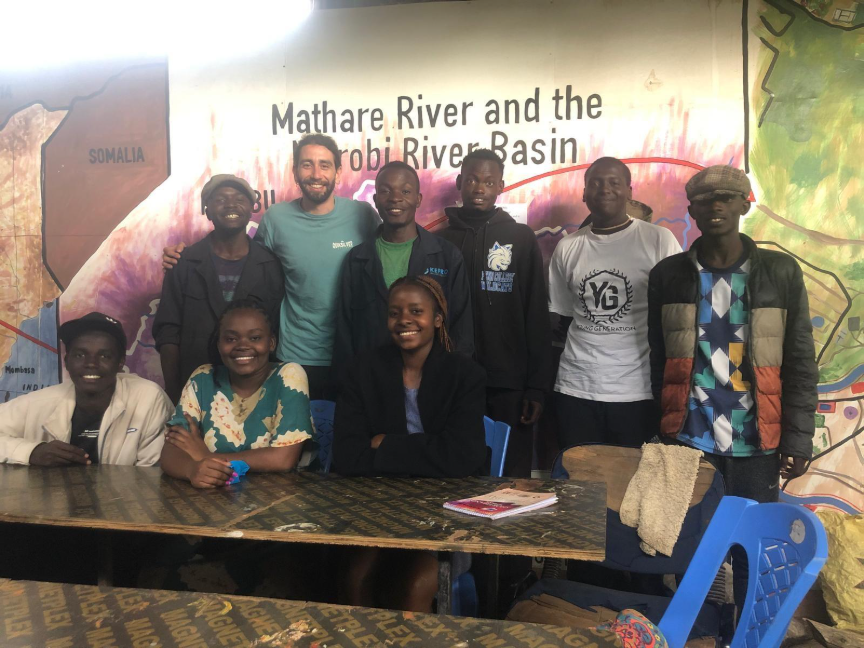
Orestis Strymponis during a focus group session at Youthprinua in Babadogo
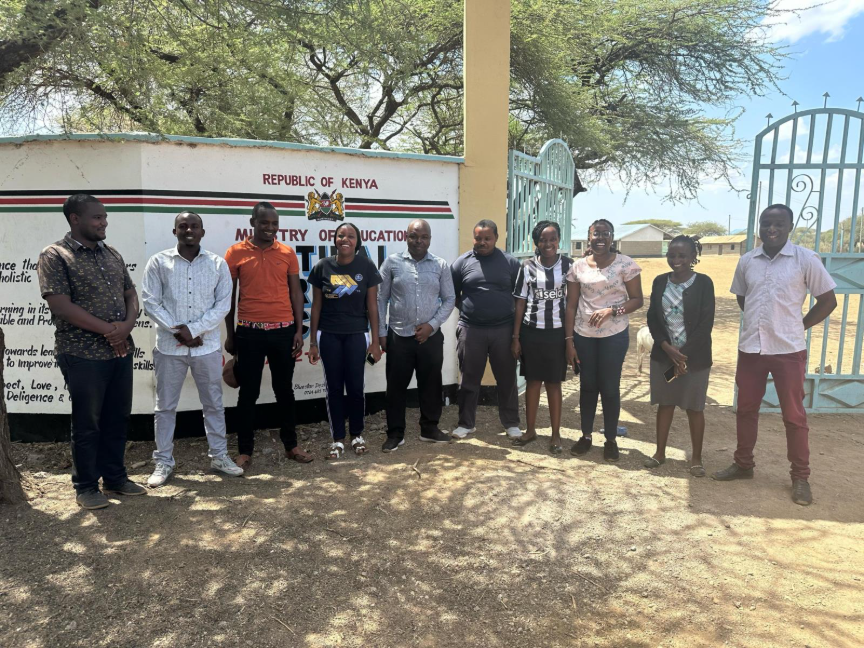
Vintage Mwangi in Kajiado
Community Researcher Training Workshop
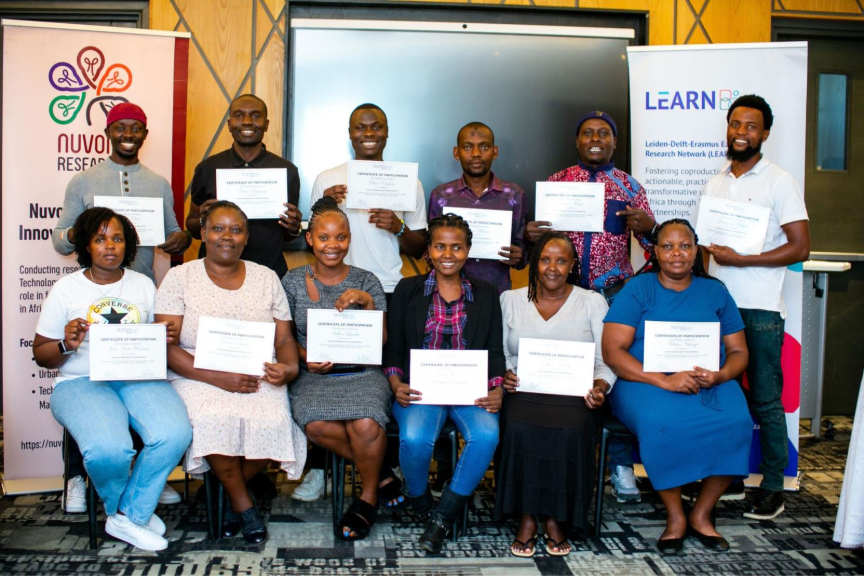
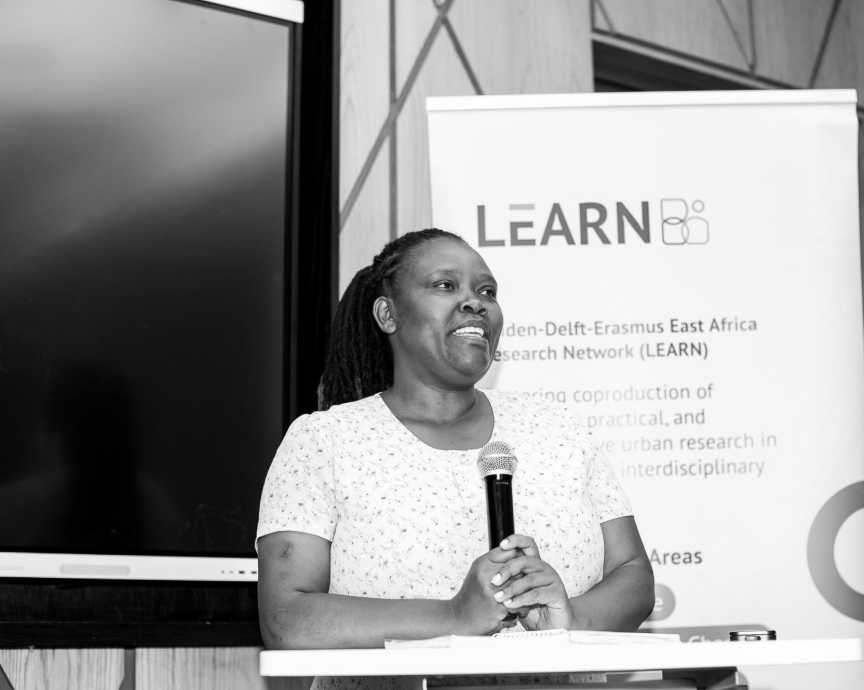
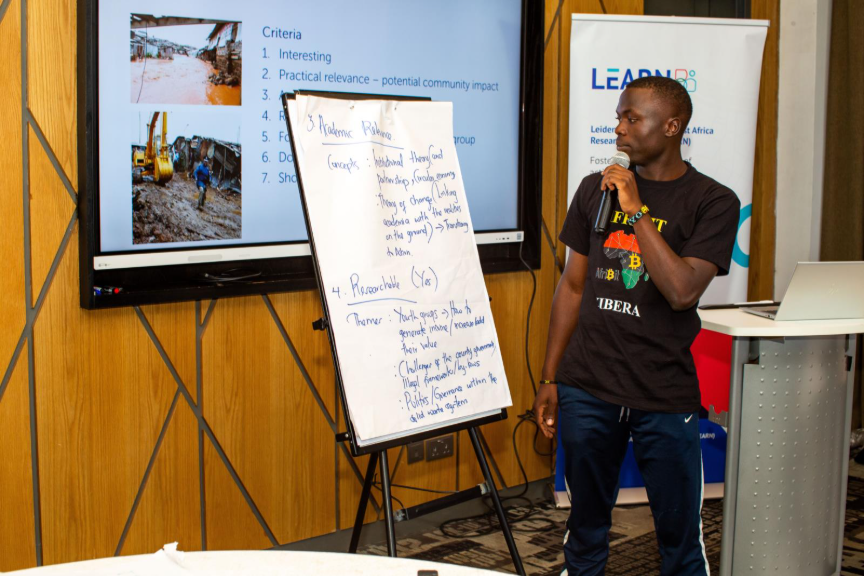
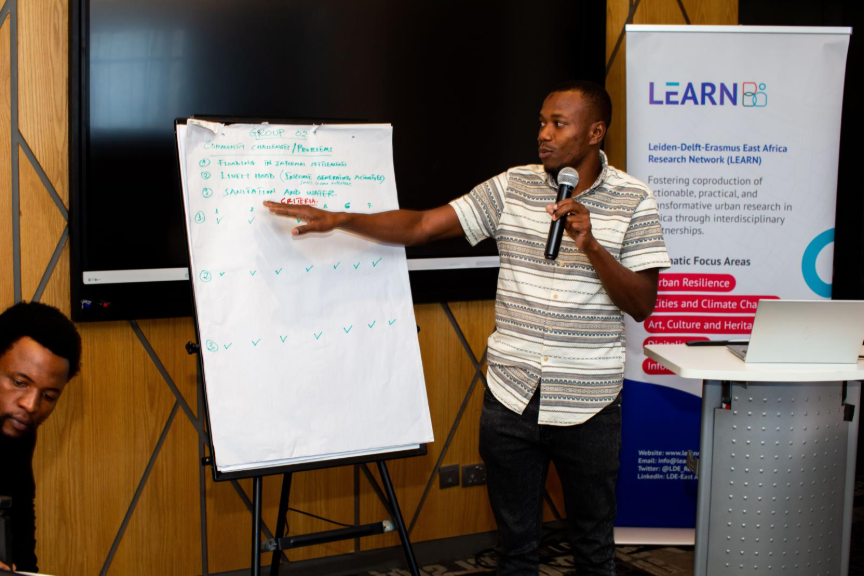
In a significant expansion of its educational mandate, LEARN organized a two-day Community Researcher Training Workshop in Nairobi.
Participants:
Community members and academics from Kenya, Uganda, and Tanzania.
Curriculum included:
- Research conceptualization
- Contextually relevant research questions
- Research ethics and power dynamics
- Data collection tools
- Qualitative data analysis
This initiative underscored LEARN’s commitment to democratizing research knowledge and recognizing community expertise as central to urban transformation.
See the highlights of the training in this Youtube Video:
Looking Ahead
2025 demonstrated that meaningful urban transformation is rooted in collaboration across cities, disciplines, and communities. From grassroots circular initiatives along the Nairobi River to transnational academic partnerships, the year affirmed a central lesson:
When research is co-created, locally grounded, and globally connected, it becomes a powerful driver of sustainable and inclusive change.