
Exploring the potential of Spectro-Polarimetry for Biodiversity Monitoring
The Biodiversity Spectro-Polarimetric Monitoring (BioSPoM) project was supported by the LDE Climate & Biodiversity Seed Fund to explore how spectro-polarimetry can be used to monitor biodiversity from space. By bringing together expertise in remote sensing, environmental sciences, aerospace engineering, space instrumentation and entrepreneurship, researchers from TU Delft, Leiden University, Erasmus University Rotterdam and Space Research Organisation Netherlands (SRON) investigated both the scientific feasibility and are building a transdisciplinary research community around this emerging technology.
Monitoring biodiversity from space
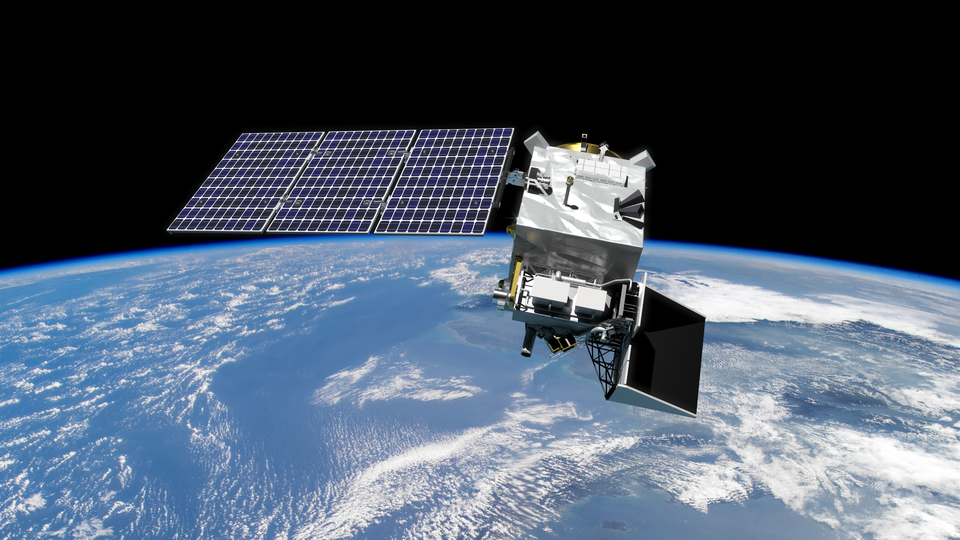
To track the status of biodiversity conservation and restoration effects, new satellite remote sensing technologies are urgently needed. Following revolutionary results from SPEXone, spectro-polarimetry emerges as a transformative technology with the potential to revolutionize biodiversity monitoring.
Yet current satellite missions remain inadequate, operating at spatial and temporal scales misaligned with ecological relevance. In the BioSPoM project a coordinated research effort was performed to advance satellite technology to contribute to global ecological targets, through a feasibility study as well as community building.
Interview about feasibility study
Master's student Nick Frances Hoeben, from the Faculty of Aerospace Engineering at TU Delft, joined the BioSPoM project while searching for a thesis topic:
“I had previously worked on optics and remote sensing, but I had never heard of these techniques being applied to biodiversity. A quick glance at the project proposal was enough to catch my interest.”
Nick explains that spectro-polarimetry itself is not a novel technology, but only recently have we started using it in space. It is quite an exciting prospect in biodiversity monitoring, since we know that vegetation gives off a quite distinct polarimetric signal. The hope is that this technology will be able to enhance what we can see: it could help in discriminating between vegetation and other surfaces such as soil and water, reduce ambiguities when compared to spectral signals, estimate canopy structural parameters, perhaps even make us able to observe physiological changes and stress within plants.

As part of his research, Nick used an imaging polarimeter to measure how leaves from different plant species reflect and polarise light under controlled conditions. In these experiments Nick placed a number of leaves of different species on a goniometric setup:
“Essentially, I was shining a strong light on the leaf, then measuring the linear polarisation at different angles within the incidence plane.”
While it varied between species, all leaves showed similar trends in how they reflect and polarise light. One interesting finding was the behaviour of the angle of linear polarisation, which consistently shifted between approximately 90° and 170–180° depending on the viewing angle—a phenomenon that, to Nick's knowledge, has not previously been noted in the scientific literature.
The feasibility study showed clear spectro-polarimetric signals in leaf-reflections, highlighting a potential for identifying leaf-angle distributions. However, the study also showed big differences in the current models capability and accuracy of simulating this signal.
Building a community
A key activity to build a community around this new satellite technology was a Talent Hackathon organised during the Amsterdam Space Symposium 2026. Sixteen students from Civil Engineering and Geoscience and Aerospace Engineering worked in multidisciplinary teams to design a mission based on spectro-polarimetry. With guidance from experts from the TU Delft, Leiden University, Erasmus University and SRON, the students created three mission concepts based on this new satellite technology: (1) to estimate amino acid concentrations and sugars found in living plants, (2) to map aerosols-content and their atmospheric effects, and (3) to identify forest fires. These mission concepts were then pitched to space entrepreneurs present at the Amsterdam Space Symposium.
Nick participated in the event as one of the scientific experts:
“I was impressed by the students, who delivered some very interesting ideas after only familiarizing themselves with the topic for an afternoon. I experienced an atmosphere of clear curiosity at this rather novel idea, and the entire afternoon had an upbeat feeling to it - everyone seemed to enjoy it.”
The Talent Hackathon contributed to community building and indicated a deep interest of both students and stakeholders in the subject, in particular if additional applications (such as spectral characterisation, methane emissions and forest fire detection) are embedded within the mission. Utilizing these outcomes, spectro-polarization research is now also visible within the Dutch community of vegetation remote sensing at large with the incorporation of this theme in two work-packages of the ASCENT project (recently funded by the NWO).
Tangible outcomes and follow up
With the support of the Climate & Biodiversity Seed Fund the BioSPoM project consortium was able to "work on a dream", according to project leader Joris Timmermans. Even though the project had an explorative nature, it has contributed to tangible scientific and societal outcomes:
- A calibrated lab-setup for measuring leaf spectro-polarimetric footprints
- A master's thesis investigating the feasibility of spectro-polarimetry for biodiversity monitoring (completion expected in September 2026).
- A Talent Hackathon at the Amsterdam Space Symposium 2026, connecting students, researchers and space-sector stakeholders around this emerging research field.
- Outreach through project videos and social media, helping to grow awareness of spectro-polarimetry for biodiversity monitoring.
- Integration of spectro-polarimetry into the ASCENT project, recently funded through the NWO-GO thematic call (€3.2 million), where the theme is embedded in two work packages representing approximately €600,000 of research activities.
- Embedding of spectro-polarimetric theme within the Quantitative and Terrestrial Remote Sensing (QUARTS) Lab at TU Delft.
To learn more, watch the Talent Hackathon video or get in touch with Joris Timmermans to read their full report and explore opportunities for future collaboration to reinforce this emerging community.
Video by Robert Kroonen, Kroonen Social Media Consultancy


