


Joint minor: Crisis, Risk & Disaster Management
The central theme of this minor is the prevention of damage caused by uncertain events (incidents). In our complex society, anything can go wrong. How can we reduce the likelihood of such events occurring or ensure that their consequences are less catastrophic?
This field is called risk management and is important in all kinds of sectors. Think, for example, of aviation safety and security. You will also learn to look at questions from different perspectives, such as: Should the police be allowed to hack criminals? What side effects of security measures are acceptable when it comes to preventing terrorist attacks?
Topics covered in this minor:
- Law & Security
- Crisis and Security Management
- Security & Organisation
- Security & Technology
- Terrorism & Counterterrorism
- Security Integration Project
 This minor is a collaboration by the Faculty of Governance and Global Affairs of Leiden University (Campus The Hague) and the Faculty of Technology, Policy and Management of TU Delft. The minor is also open to students of Erasmus University Rotterdam.
Reasons to choose a Leiden-Delft-Erasmus minor:
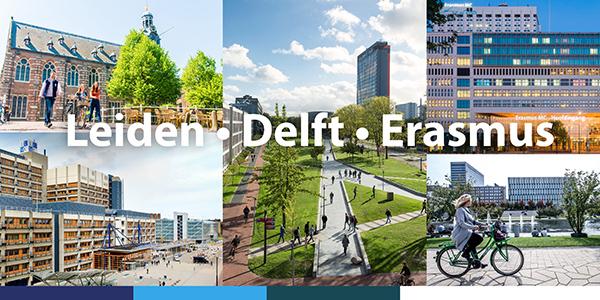 1. You get multidisciplinary education programmes provided by three top universities.
2. You learn about urgent social issues and new potential solutions.
3. You meet lecturers and students from a range of specialisms.
4. You work on case studies from businesses, government authorities and NGOs.
5. You build a network in Leiden, The Hague, Delft and Rotterdam.
Curious? All Leiden-Delft-Erasmus minors can be found here
What are the key features of the multidisciplinary Leiden-Delft-Erasmus minors?
- Admission requirements: Most Leiden-Delft-Erasmus minors are open to all students of Leiden University, TU Delft and Erasmus University Rotterdam. A small number also require prior knowledge or involve a selection process.
- Number of places: Although it varies according to the minor, between 40 and 90 students can participate (see the link below for numbers for each minor). Students from each of the universities are equally likely to be placed.
- Language: All Leiden-Delft-Erasmus minors are taught in English.
- ECTS credits: All minors have a coherent program of 30 EC. It is possible to only follow the first block of 15 EC.
- Location: The lectures and seminars are held in one or more of the following cities: Leiden, Delft, The Hague, Rotterdam.
- Applications: You apply for a Leiden-Delft-Erasmus minor via eduXchange.
- Selection: Some Leiden-Delft-Erasmus minors are selection minors, which means you will need to write a motivation letter. Make sure you check the application date.
Students about this minor:
 'The minor allows you to understand news headlines from a more nuanced and analytical perspective.’
Floor Stoelinga, a recent graduate of International Relations and Organisations at Leiden University, who chose the minor Security, Safetey and Justice: ‘My keen interest in global security issues led to my taking this minor. The minor allows you to understand news headlines from a more nuanced and analytical perspective.’
‘With a background in political science, many of the topics covered in the minor (such as technological developments and risk analysis) were new to me. Interacting with people from different educational backgrounds allowed me to develop a new way of thinking; it elevates your analytical capabilities.
'The mix of courses leads you to discuss and debate the complexity of real-world situations, which taught me the need for different approaches to and dimensions of an issue.’'
 Alves Marinov, a student of Computer Science at TU Delft, notes that the minor Safety, Security and Justice has the potential to broaden one’s horizons. ‘The minor is full of valuable insights and experiences. The mix of Leiden, Delft and Erasmus give all sides the opportunity to learn from each other.’
‘My own bachelor programme, Computer Science, is a very exact field involving a quite straightforward way of thinking. In the minor, we learn how there are multiple paths to problem-solving, and how divergent thinking may lead to useful outcomes.
The minor employs various different theories, rather than the more hands-on approach I was used to in my bachelor programme. The approach in the minor allows you to go into research in more depth and to analyse topics from different sides. The mix of courses leads you to discuss and debate the complexity of real-world situations, which taught me the need for different approaches to and dimensions of an issue.’