


Municipalities are digitizing at a rapid pace, for example with virtual counters and fraud-detecting algorithms. Professor Jiska Engelbert, scientific director of the Leiden-Delft-Erasmus Centre for BOLD Cities, warns: the digital city does not necessarily serve the well-being of residents.

Engelbert delivered her inaugural lecture at Leiden University on 24 November 2025 on the occasion of her appointment as professor by special appointment to the Ien Dales Chair at the Faculty of Governance and Global Affairs (Institute of Public Administration) at Leiden University. In her inaugural lecture, she argued for critical civil servants who dare to oppose.
The need for this is high, because Dutch municipalities are investing massively in digitization, Engelbert points out. They appoint Chief Technology Officers, mostly from the tech industry, who guide local governments further into the digital age. According to her, this development fits in with a broader trend.
Since the 1980s, municipalities have increasingly been run according to business principles and digitization is a logical consequence of this. Citizens are seen as customers, and civil servants must deliver measurable results.
Business thinking
Above all, the city must be attractive to investors, according to Engelbert. Digitization reinforces this business thinking. Civil servants must work in an 'agile' and 'agile' way, according to the logic of consultancy firms. 'Doing the right thing is so often equated with following protocols and ticking off technological tests.'
Digitization of municipalities requires more obstructionists'
Public interest
She is certainly not against digitization, the endowed professor emphasizes. Virtual counters can make services more efficient and citizens can arrange many things from home. Engelbert mainly wants to question the self-evidence of digitization.
In practice, too little attention is paid to the question of whether a certain technology should be used and whether it serves the well-being of the residents. Is everyone digitally skilled enough to participate? Aren't private tech companies, which manage the data flows of our cities, gaining too much power?
That is why Engelbert praises civil servants who dare to ask critical questions and say no to tech companies when necessary. 'Critical civil servants are often seen as obstructionists who unnecessarily slow down the organisation. But it is precisely those obstructionists who deserve appreciation if they guard the public interest.'
Ethnographer
In her inaugural lecture, she wants to mention some inspiring examples from Rotterdam. Such as the Stadsluister010 project, which creatively encourages civil servants to take citizen participation seriously and not to roll out their own agenda too quickly. As a kind of ethnographer, Engelbert will follow these kinds of initiatives in the coming years and will speak on location with officials and residents' collectives.
'I want to know how much space civil servants have and give each other. What are their obstacles? Are they judged too tightly on their tasks? Is there an institutional fear of having critical conversations?' At the same time, she is researching the digital culture of municipalities to find out why visionary tech experts and digital measurement tools thrive so well here.
Nickname
As far as Engelbert is concerned, the stamp 'sleeper' may become a badge of honour and also a metaphor: on the train track it is the sleepers (the sleepers) that hold the rails together. 'Without obstructionists, the public interest threatens to go off the rails.'
The Ien Dales chair is funded by the A&O Fund Municipalities and the CAOP Foundation. Engelbert, together with prof. dr. Zeger van der Wal will fill in the chair.
Leiden-Delft-Erasmus Centre for BOLD Cities
Jiska Engelbert is scientific director of the Leiden-Delft-Erasmus Centre for BOLD Cities. This multidisciplinary centre is a collaboration between Leiden University, TU Delft and Erasmus University Rotterdam and conducts research into developments in the Smart City.
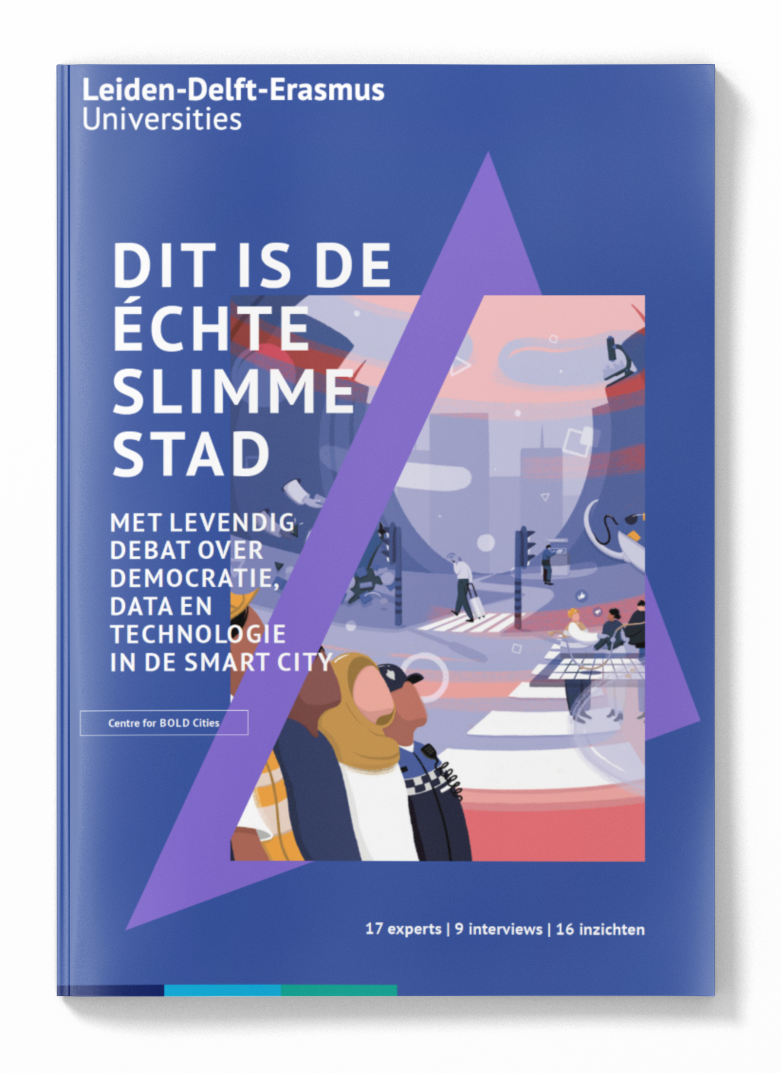
The centre is committed to citizen participation and critical questioning of digitisation and datafication in and of the urban environment. The emphasis here is on making technology questionable. Also read the white paper: 'This is the real smart city'.
This autumn, the Centre also interviewed experts on digitisation and democracy. Listen to the episodes of BOLDcast | Centre for BOLD Cities