Eighteen joint Indonesian-Dutch research projects have been granted through INUCoST across two batches, and a third round was launched in October. One year into the collaboration, the eight Batch 1 teams met in Surabaya to share early results and discuss the next phase of their work.
What is INUCoST?
Since October 2024, the LDE Centre in Indonesia has worked with the Indonesian Ministry of Higher Education, Science, and Technology on the Indonesia-Netherlands Universities Consortium on Sustainable Futures, or INUCoST. The consortium connects LDE researchers with five Indonesian universities: Universitas Indonesia (UI), Universitas Gadjah Mada (UGM), Institut Teknologi Bandung (ITB), Universitas Airlangga (UNAIR), and Universitas Mulawarman (UNMUL).
The collaboration starts with matchmaking, bringing together researchers with related interests who may not have worked together before. Once a team has been formed, the researchers develop a joint proposal and submit it through LPDP, Indonesia’s national research and academic funding agency.
INUCoST works with a matching-fund structure in which each country supports its own researchers. Indonesian teams receive research funding through LPDP, while LDE researchers receive mobility funding through LDE.
In the first funding round, eight joint proposals were selected across three broad themes: biodiversity, artificial intelligence & smart cities and energy transition. Batch 2 added ten projects in non-communicable diseases, public health, mental health, climate and energy, with partners from Leiden University, TU Delft, Erasmus MC and LUMC.
Batch 1: eight projects, three themes, one year in
The eight projects bring together different disciplinary perspectives across three broad themes that are relevant to both countries.
Biodiversity. This is the largest theme in Batch 1, with four projects led from ITB, UGM, UNAIR, and UNMUL, each together with an LDE partner from Leiden University, Erasmus University Rotterdam or TU Delft. UNMUL brings strong expertise in the field. The projects map spices, including different varieties of nutmeg, and work on conservation in the dipterocarp, swamp, and mangrove forests around Indonesia’s new capital, Nusantara (IKN), with the aim of strengthening food security and resilience through forest restoration. After one year, the teams have produced a policy brief and organised an international conference on spices and biodiversity.
Artificial Intelligence & Smart Cities. This theme looks at the governance of smart city development in Nusantara and at smart campus mobility for an inclusive and sustainable future. The governance project is led from UGM together with Leiden University, the mobility project from UI together with TU Delft. The collaboration has enabled Indonesian researchers to hold a research workshop in the Netherlands, and LDE researchers have received mobility funding for fieldwork in Indonesia. The partnerships have already produced a published book on smart cities and democratic governance.
Energy Transition. This theme examines the legal frameworks that support a just energy transition in Indonesia and how they play out in Nusantara. One project, bringing together researchers from UI and Leiden University, explores the regulatory and governance dimensions of a just energy transition. A second, led by researchers from UGM and TU Delft, looks at how these principles can be applied in the development of Nusantara itself. The collaboration has already resulted in a policy brief to raise public awareness of the issue.
Sharing results in Surabaya
On 29 and 30 June 2026, the LDE Centre in Indonesia and Universitas Airlangga hosted the INUCoST Early Research Dissemination Workshop in Surabaya. The meeting brought together the eight project teams as well as representatives from the Ministry of Higher Education, LPDP, the Education & Science Attaché of the Embassy of the Kingdom of the Netherlands in Indonesia, and the Directors of Research and Innovation from the partner universities.
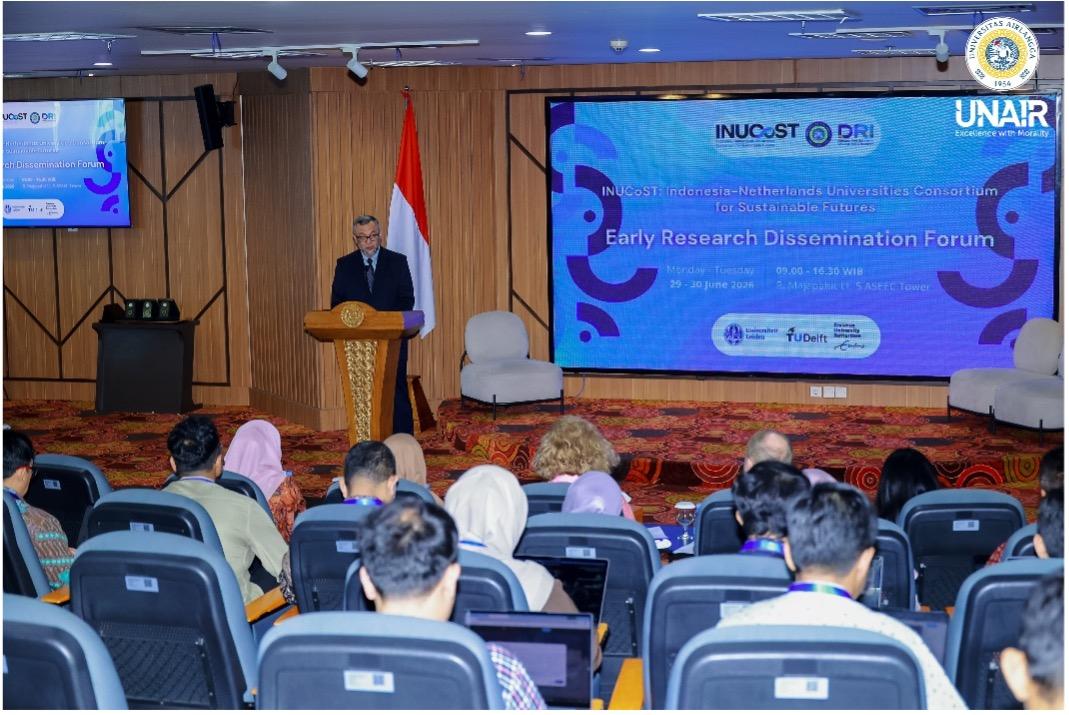
Photo by: DRI UNAIR
Prof. Ir. Mochamad Amin Alamsyah, Vice Rector I of Universitas Airlangga, opened the workshop by highlighting the relevance of the three research themes to sustainable development in Indonesia. He also stressed that international research collaboration should lead to more than scientific publications.
“Successful international collaborations are not only based on shared expertise, but also trust, openness, and a shared vision to create positive impact,” he said.
Yvonne Klerks, Education & Science Attaché at the Embassy of the Kingdom of the Netherlands in Indonesia, referred to INUCoST as a best practice in bilateral cooperation between Indonesia and the Netherlands and highlighted the potential for research that is relevant to both countries.
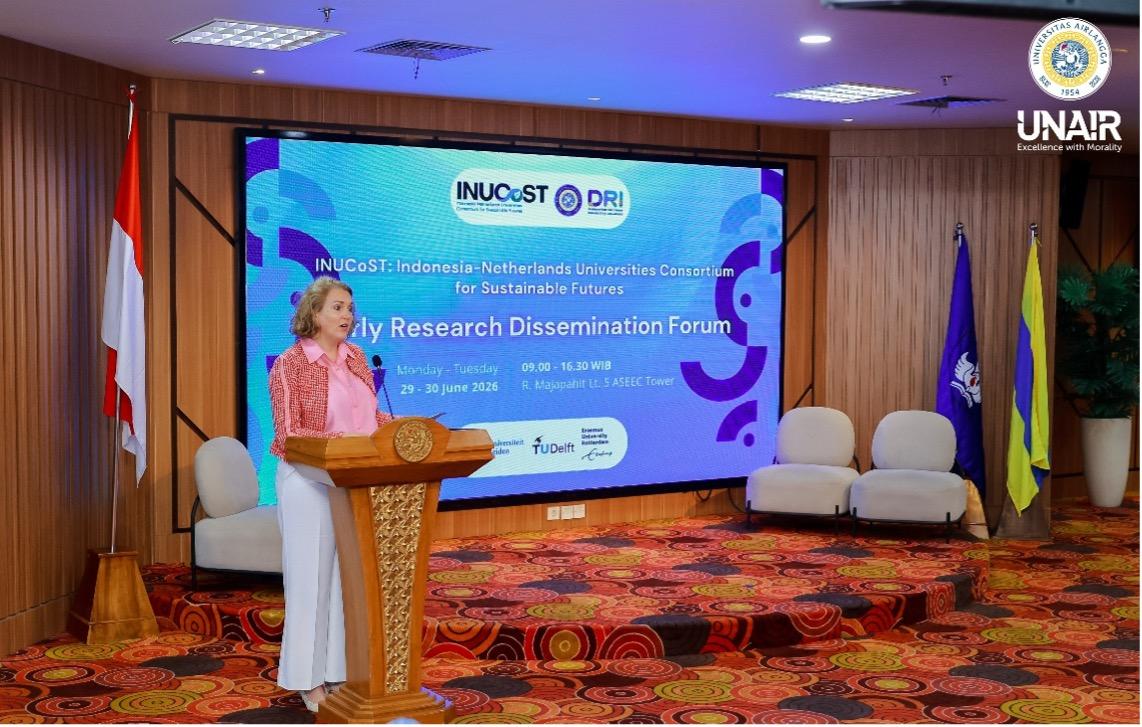
Photo by: DRI UNAIR
During the two-day workshop, the INUCoST Batch 1 teams shared progress from their first year and discussed common challenges with researchers working on related themes. They also looked ahead to the second year, including publication plans, ways to assess societal impact, and possibilities for collaboration beyond the current funding round.
Want to read more about the workshop itself?
READ HERE
Lessons from the first year
The INUCoST workshop also gave researchers and the Directors of Research and Innovation of the five partner universities room to discuss what had been difficult. One issue was how to involve PhD students in INUCoST research projects: connecting a thesis to a research project takes extra budget and a topic that fits both. The LDE Centre in Indonesia raised this with the Ministry and LPDP in follow-up talks, and both have agreed to fund PhD students who join Batch 3 projects.
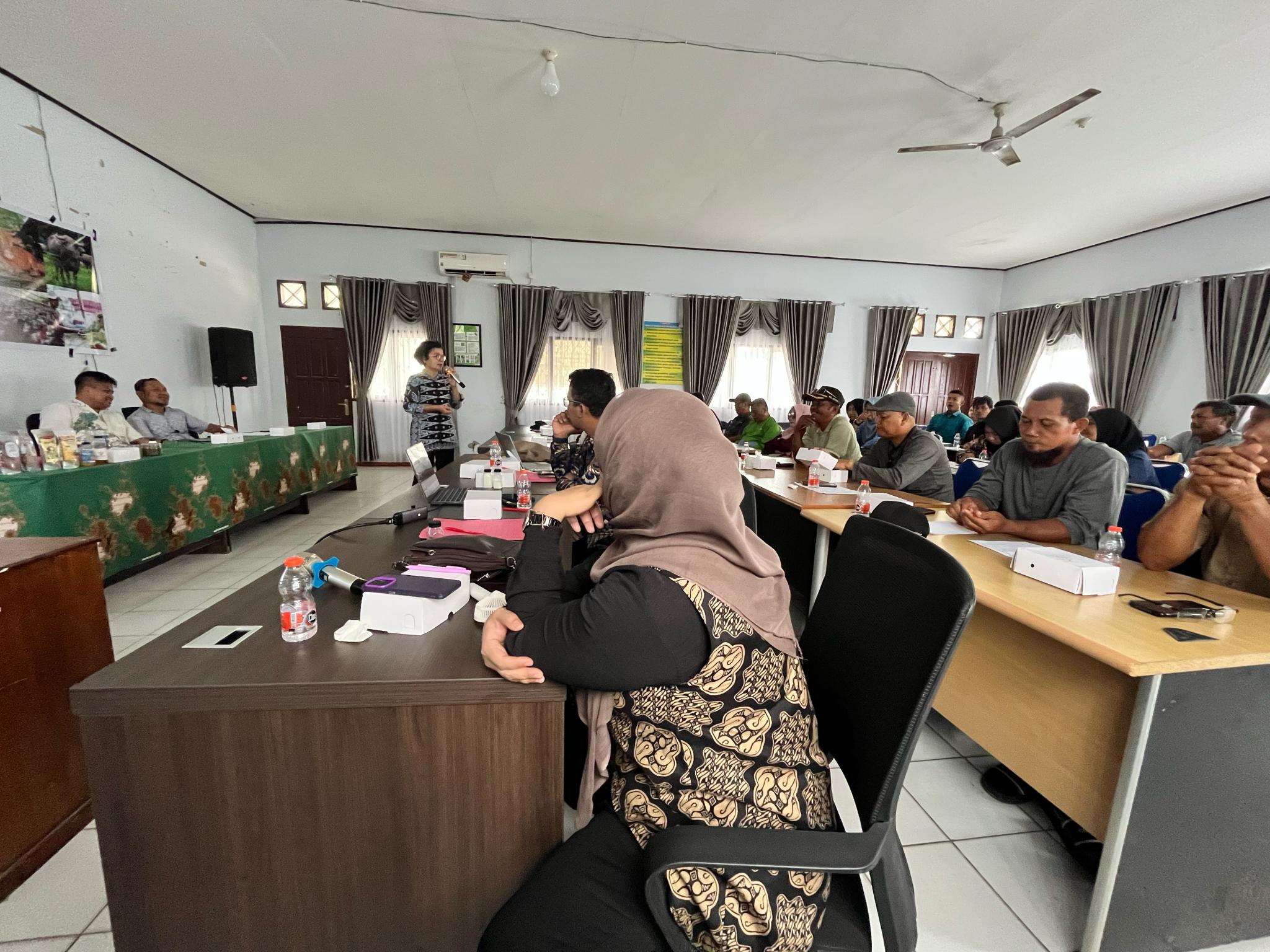
Societal impact is one of the main goals of the collaboration. A project led by Rudy Agung Nugroho of UNMUL and Oane Visser of the International Institute of Social Studies (ISS), Erasmus University Rotterdam, has worked with communities in Babulu, Sepaku, and Kutai Kartanegara in East Kalimantan. The team looked at alternative, non-fisheries sources of protein as a way to strengthen food security and community resilience. More than 50 people took part in the community activities, among them local government representatives, farmers, livestock groups, and residents. The project produced baseline data and added to local knowledge of livestock-based food security. It also supported greater self-sufficiency by making use of locally available resources for animal feed.
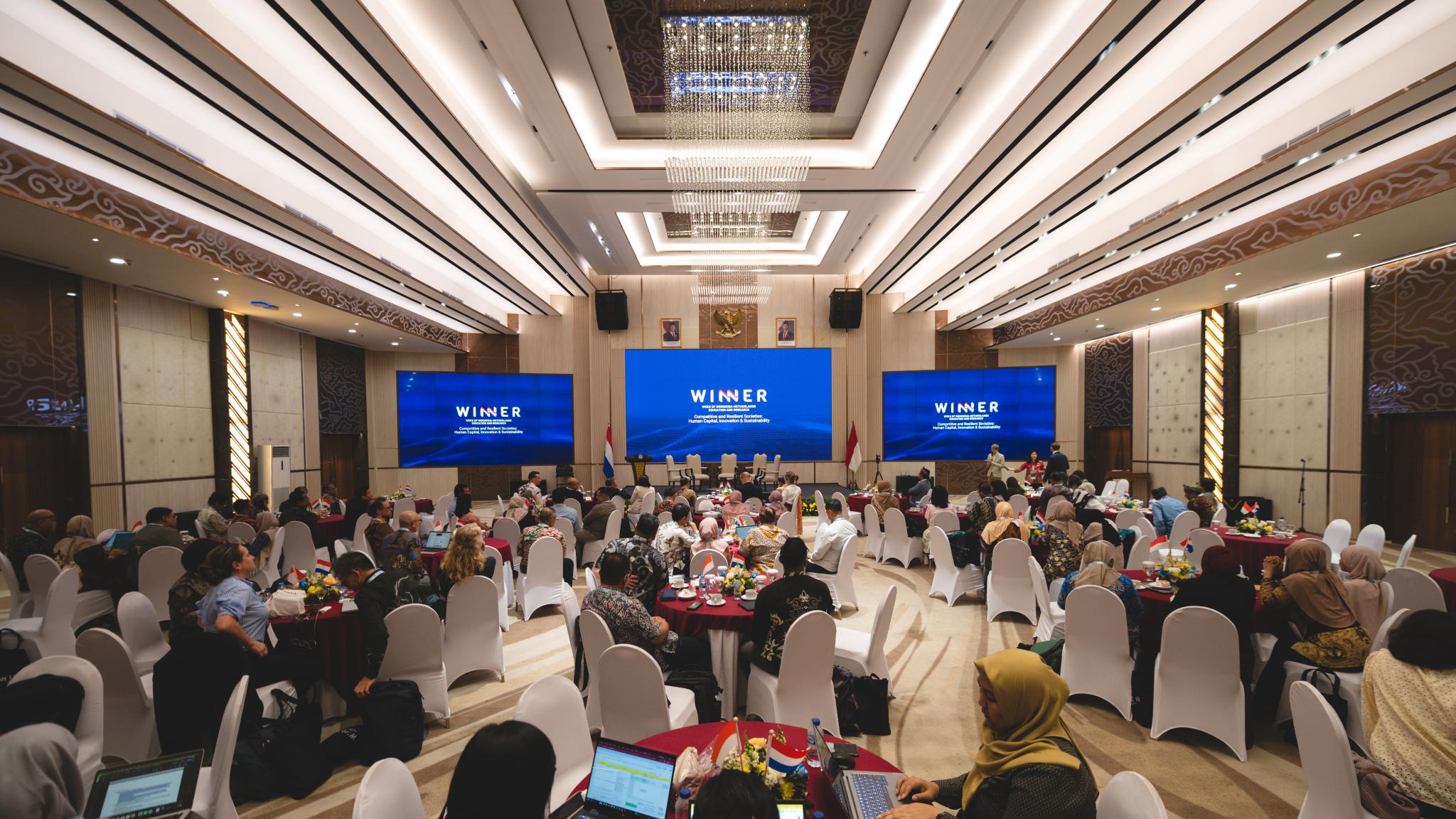
Photo by: Dutch Embassy in Jakarta
Interested in getting involved?
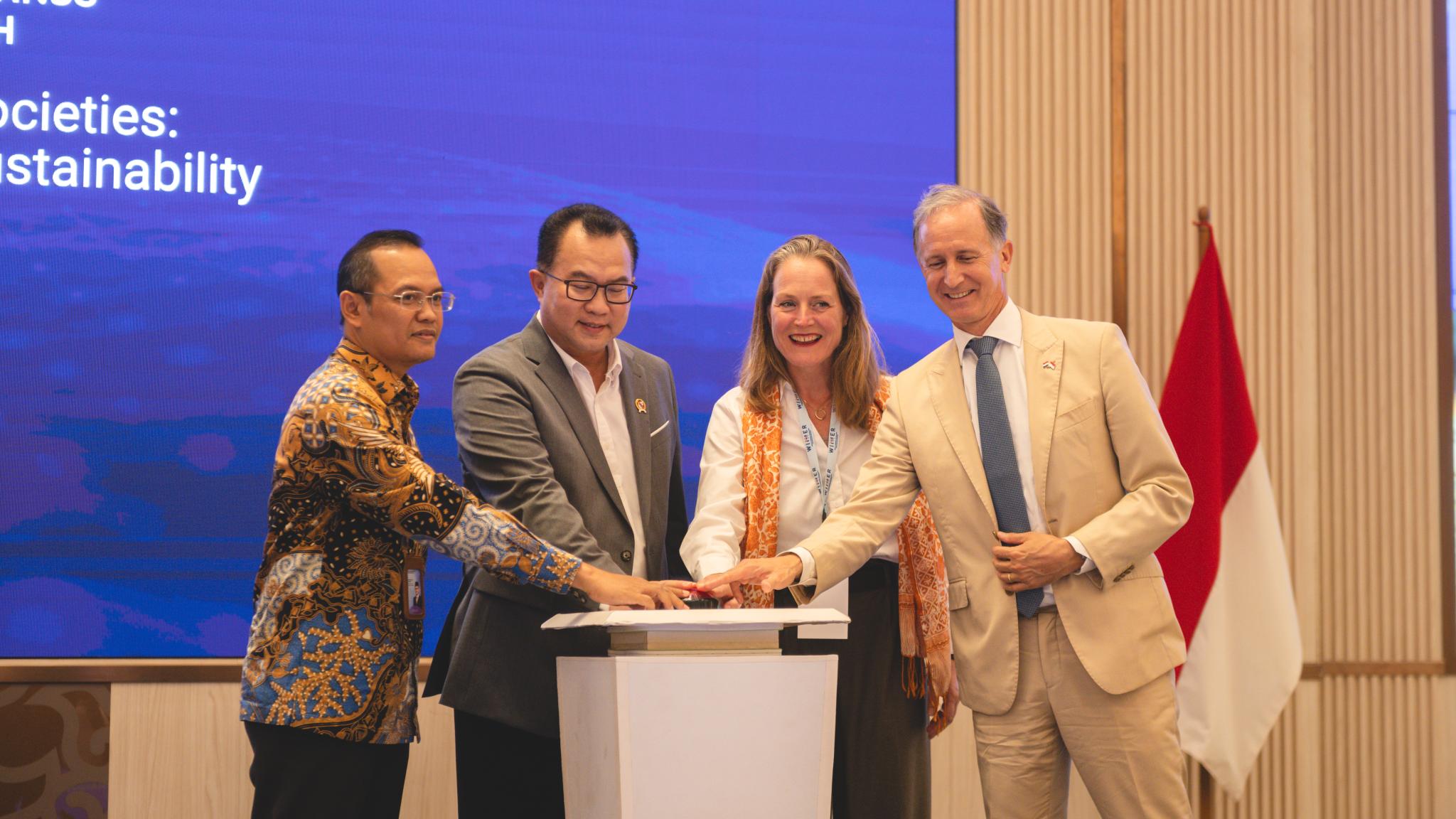
Batch 3 was launched on 6 October at the opening of the 7th WINNER Conference at the Ministry of Higher Education, Science, and Technology in Jakarta, with four priority themes: life sciences and health, energy transition in remote areas, sustainable food systems, and urban resilience. The call for Expressions of Interest follows on 2 November 2026 on the LDE website. LDE researchers who take part receive mobility funding through LDE, and Batch 3 will also offer additional funding for PhD students, as agreed with the Ministry and LPDP.
For more information, please contact: LDE@universiteitleiden.id.
Call for Expressions of Interest