


As part of the Leiden-Delft-Erasmus Minor Frugal Innovation for Sustainable Futures, we highlight the work of students who engage in interdisciplinary research on sustainable and inclusive solutions.  This month, we feature the blog of Lisanne de Haan, who joined the Frugal Innovation minor after finishing my bachelor Security Studies at Leiden University.
During her studies, she developed a strong foundation in human security, international politics, and social inequalities. She is currently shifting her focus toward environmental design, particularly biomimicry and bio-design, with the aim of contributing to transformative change in polluting industries. She is interested in integrating social and natural sciences to build bridges and develop more holistic approaches.
In this blog, Lisanne critically reflects on the promise of (frugal) innovation by examining a case study of improved biomass stoves in rural India. Through this example, she shows how even well-intended, human-centered innovations can struggle to achieve lasting social and environmental impact when long-term user behavior and local realities are not sufficiently understood.
Since the Industrial Revolution, we have believed that innovation drives our society further and that it will lead us to an improved circumstance of living. This makes us believe that when something is 'innovated', it will always come with positive outcomes. This blog shows that the path to making a meaningful impact is harder than we might imagine. ''
Lisanne de Haan
What is (frugal) innovation?
Innovation is seen as introducing novel devices, methods or materials for application to fulfil commercial or practical objectives. This can be initiated by many kinds of people and groups, such as multi-national research companies, but also by people innovating from the local level.
Frugal innovation is reimagining the process of innovation and drifting away from the emphasis on growth, mechanisation & protocolization. The notion of frugality emerged from the new societal challenge of resource constraints and the motivation to lower the cost index of products to enter the market viably. It was only quickly forgotten during the consumerism era, pushed by the Industrial Revolution, where fulfilling consumerist desires was promoted. From the 1970s onward, frugality was debated and published about again due to environmental and ecological concerns. Now, it is a multi-faceted concept which also focuses on designing innovations from a more “human-centred approach”, including emphasis on wider accessibility, low-cost/resource functionality and simplicity of a product.
Innovating frugally from the Indian rural context
For several decades, India has been struggling to solve the problem of indoor air pollution in households. Currently, many households are dependent on using traditional stoves, especially households in rural areas. They burn solid fuels like wood, hay, cow dung, and crop waste. However, the burning of waste is done inefficiently, producing large amounts of smoke and toxic emissions, including carbon monoxide and particulate matter. Consequently, cooking causes severe indoor air pollution, which leads to numerous health issues such as cancer, respiratory infections and other illnesses.
In 2006, BP Energy India Ltd. made an attempt to combat this societal issue through commercially distributing advanced stoves. This was done to fulfil the needs of households and to contribute in moving to alternative clean energy options. This was realised through a collaboration between BP and its Indian successor company, First Energy Private Limited (FEPL). The target group that the company wanted to reach were low-income families situated in rural areas. To figure out how to create a cost-effective stove that will also meet the needs of these families, a team of researchers conducted ethnographic research to delve into the routines and habits of rural families. Besides fitting the context and the needs of the families, the product also needed to be functional, accessible, available and energy-efficient. Hence, the team collaborated with several local actors to interact with and include their knowledge in the design processes.
Examples are: village-level entrepreneurs, several NGOs, Indian universities and other knowledge institutes. Consequently, the company team could build strategies on increasing the energy efficiency, safety and popularity of the improved stove. Subsequently, creating a business eco-system that would support the smooth integration of a product into local communities. This included collaboration with women, closely connected to the community, to advise potential buyers of the stoves as well as stock for the stoves and fuel. This was crucial for making stoves accessible and fuel available all the time. Furthermore, creating awareness among community members on how the new stove worked and why it was better than traditional ones.
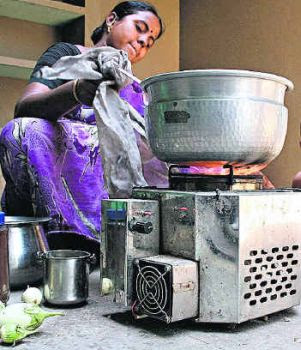
To summarise, the company wanted to achieve changes through entering an unsaturated market of customers with low-level incomes. Making changes to create opportunities for a more sustainable future, which includes the health of the natural environment as well as improving the quality of every human life. Till now, you might have still thought that innovation and development with a good cause will often leap into success. However, I will show you that the leap towards realising the intended positive impact is a longer road than you have imagined, especially when it comes to frugal innovation.