
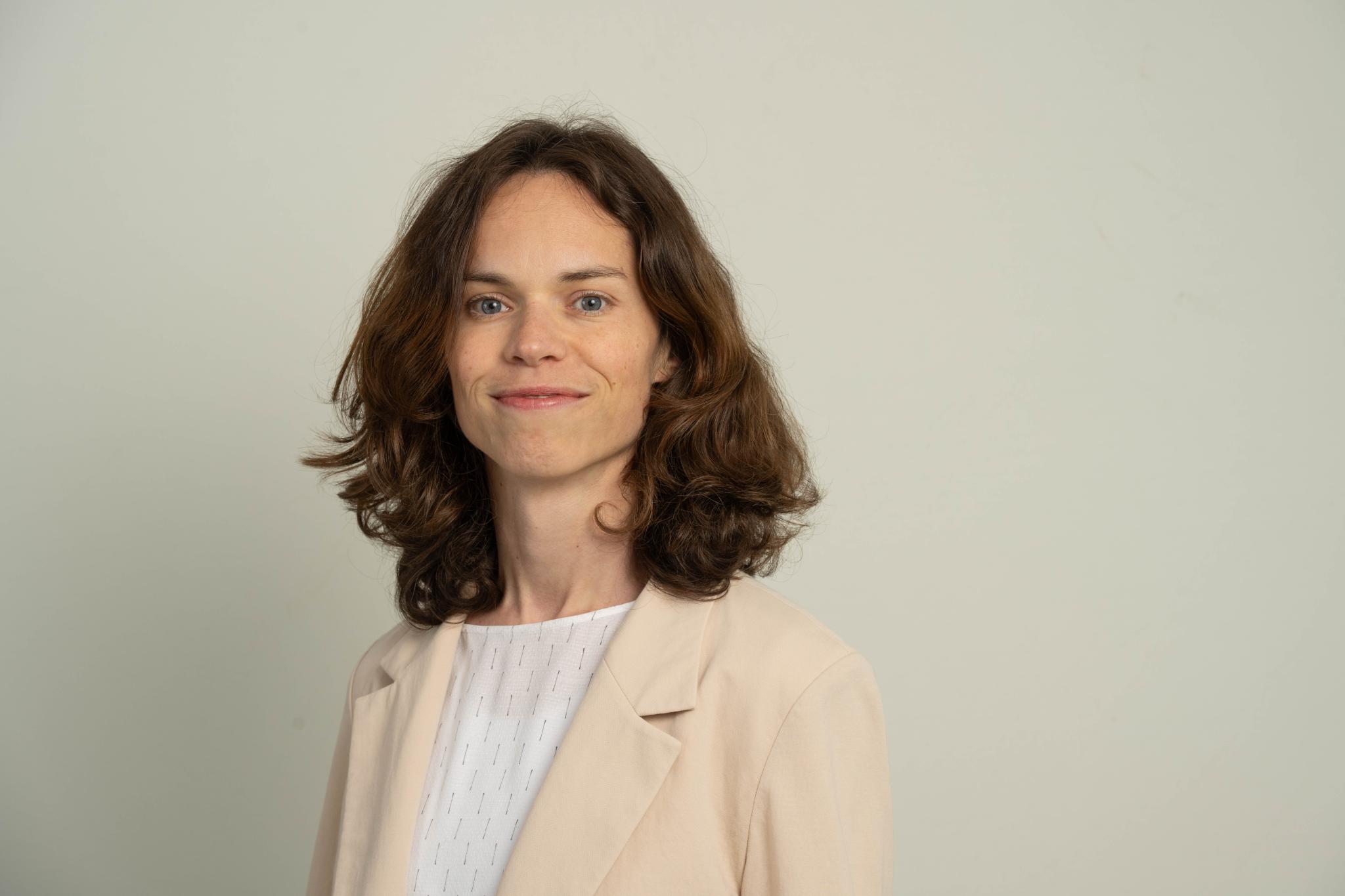
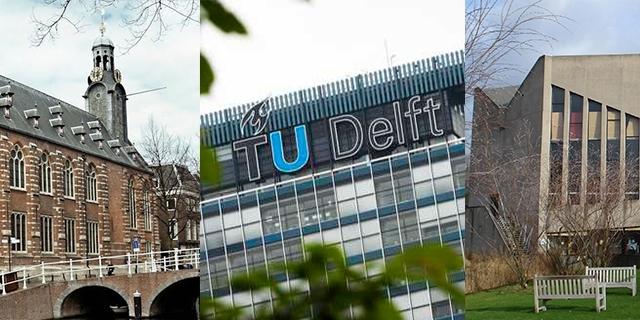
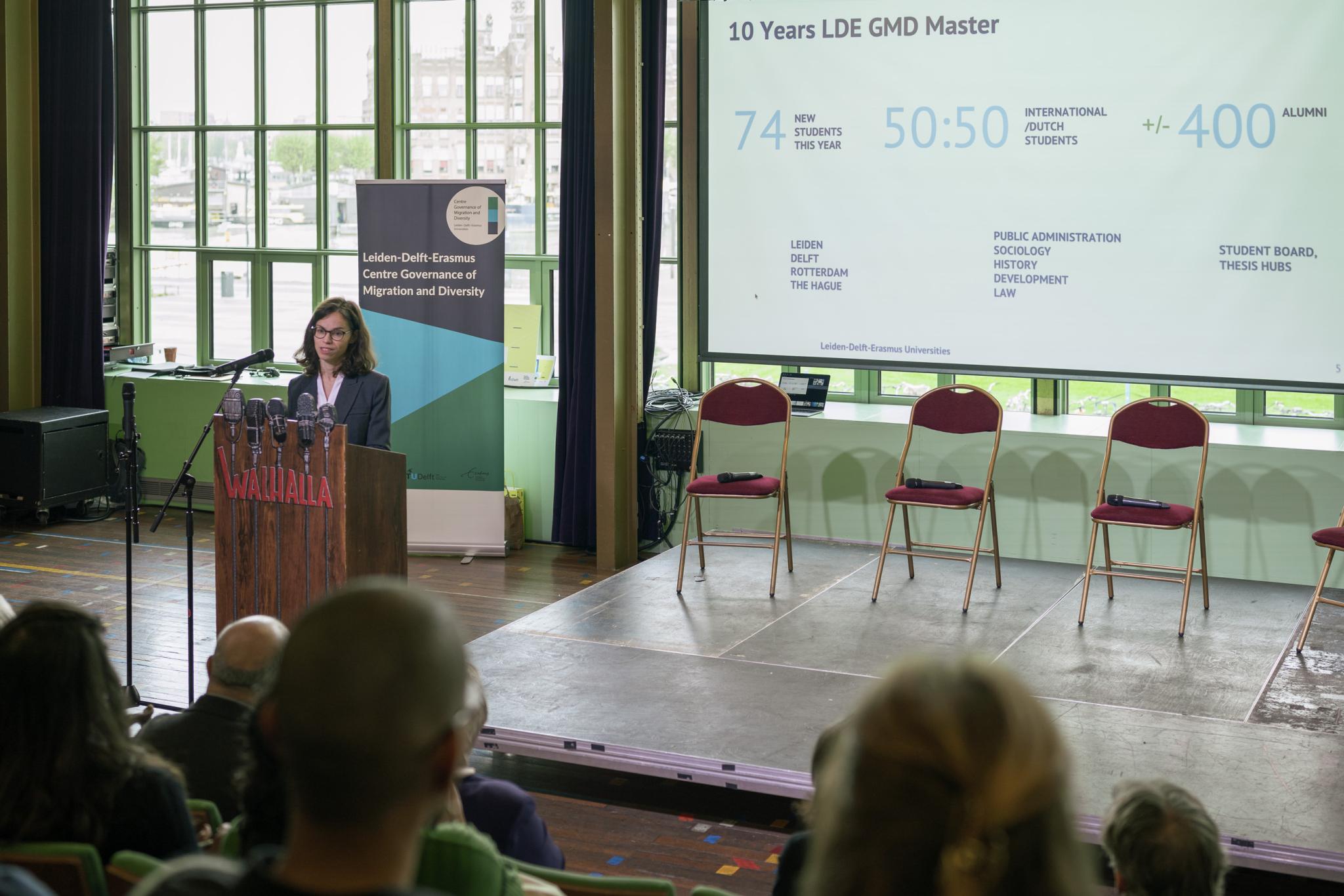
The Leiden-Delft-Erasmus Centre Governance of Migration and Diversity (GMD Centre) celebrated its 10th anniversary last year. It is a successful collaboration between Erasmus University Rotterdam, Delft University of Technology and Leiden University. Centre Manager Maria Schiller explains why educational collaboration provides a solid foundation.
What is the history of the LDE Centre Governance of Migration and Diversity?
Maria Schiller: 'The LDE Centre Governance of Migration and Diversity was founded to bring together the complementary strengths of Leiden University, Delft University of Technology, and Erasmus University Rotterdam to address one of the most pressing societal challenges of our time: migration and diversity.'
History, law, governance, sociology, urban studies, design
'The collaboration grew out of the successful Master track Governance of Migration and Diversity, which began in 2016 as an inter-university initiative. Building on this foundation, the Centre was formally established to broaden the scope beyond teaching, combining research, education, and societal impact.'
'By pooling expertise from history, law, governance, sociology, urban studies, design, and development studies, the Centre has positioned itself as a hub for both academic excellence and policy-relevant knowledge in the governance of migration and diversity.'
Why was it decided to first develop a joint education programme and only then a research programme?
'The joint education programme was a logical first step because it provided a concrete and highly visible platform for cooperation between the three universities. The GMD Master track allowed staff from different disciplines and institutions to work closely together in teaching, while at the same time engaging directly with students who were eager to study migration and diversity from a multidisciplinary perspective.'
Pooling expertise
'This early collaboration built trust and created strong academic and organizational ties across Leiden, Delft, and Rotterdam. The success of the Master track also demonstrated the added value of pooling expertise, making it natural to extend the collaboration into joint research and impact-oriented initiatives. In this way, education became the cornerstone that facilitated a sustainable and expanding partnership.'
How have disciplines such as Law and Architecture become associated with the Centre over time?
'Architecture/Urbanism and Law were involved from the outset, though their roles have evolved and deepened over time. Delft University contributed from the core beginning with its course on Social Inequality in the City, Diversity and Design that provided unique opportunity for students to engage with migration and diversity from an urban studies and urban design perspective.'
How are cities and communities designed to accommodate superdiverse populations?
'Legal perspectives on migration and diversity provided by Leiden Law were always central to the Centre’s mission, and since past year they also run their own Legal track in the Master program. Migration and diversity raise questions about fundamental rights and legal obligations, as well as about how cities and communities are designed to accommodate superdiverse populations.'
'These disciplines were therefore not late additions but rather integral components of the multidisciplinary vision that underpins the Centre. Over time, their contributions have become even more prominent as societal debates increasingly highlight both the legal frameworks and spatial challenges of migration governance.'
Does the Centre tailor its programme to social developments, or does it focus on long-term issues?
'The Centre does both. On one hand, it is committed to addressing urgent societal developments such as debates about responses to the arrival of larger number of asylum seekers that emerged after the arrival of Syrians, Afghans and Ukrainians, or the increasing presence of fact-free and symbolic politics in immigrant policymaking in recent years.'
Long-term academic questions related to migration and diversity
'This responsiveness ensures that the Centre remains relevant and contributes knowledge to pressing policy discussions at local, national, and international levels. On the other hand, the Centre also pursues long-term academic questions related to migration and diversity, such as citizenship, participation and anti-discrimination, urban resilience, and multi-level governance.'
'The dual focus enables the Centre to combine timely insights with durable theoretical contributions, ensuring both immediate societal impact and sustained academic relevance.'
How does the Centre incorporate social input and the knowledge needs of governments into its research agenda?
'The Centre actively integrates societal and governmental needs into its research design. Migration and diversity are topics that directly affect local municipalities, national governments, European institutions, NGOs, and international organizations. The Centre maintains close connections with these stakeholders to understand their policy challenges and knowledge demands.'

'Most recently it launched a professional program on the Migration Society targeted at practitioners from municipalities and other public institutions. Also, in collaboration with Sociale Vraagstukken the Centre is hosting a brand-new public form on migration issues on migratiesamenleving.nl.
The Centre maintains close contacts with stakeholders through its own Advisory Board (Adviesraad), including representatives from organizations such as the FNV or the Adviesraad Migratie.'
'By involving practitioners, NGOs, and policymakers in research networks and dialogue, the Centre ensures that its work not only advances academic debates but also provides actionable knowledge. This co-creation of research agendas makes the Centre a trusted partner for governments and civil society.'
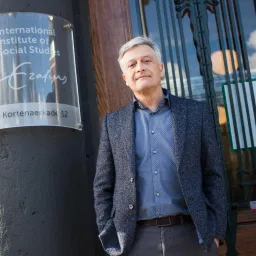
Dr. Maria Schiller is an a Associate Professor in Public Policy, Migration and Diversity, Managing Director of the Leiden-Delft-Erasmus Centre Governance of Migration and Diversity (LDE GMD) and theme leader Inclusive Cities and Diversity - EUR Vital cities and citizens Initiative at the Erasmus School of Social and Behavioural Sciences. Contact: schiller@essb.eur.nl