


In the midst of an uncertain geopolitical situation, international cooperation is becoming increasingly important to address global challenges. As part of its academic mission, the Leiden-Delft-Erasmus Universities Alliance (LDE) recognises the crucial role of international research collaboration in addressing societal challenges and building a sustainable future. In this spirit, the LDE Centre in Indonesia has worked with the Ministry of Higher Education, Science, and Technology of the Republic of Indonesia since October 2024 to promote interdisciplinary research and education collaboration through the Indonesia-Netherlands Universities Consortium on Sustainable Futures (INUCoST). Through this consortium, LDE is proud to strengthen its collaboration with five leading universities in Indonesia: Universitas Indonesia (UI), Universitas Gadjah Mada (UGM), Institut Teknologi Bandung (ITB), Universitas Airlangga (UNAIR), and Universitas Mulawarman (UNMUL).
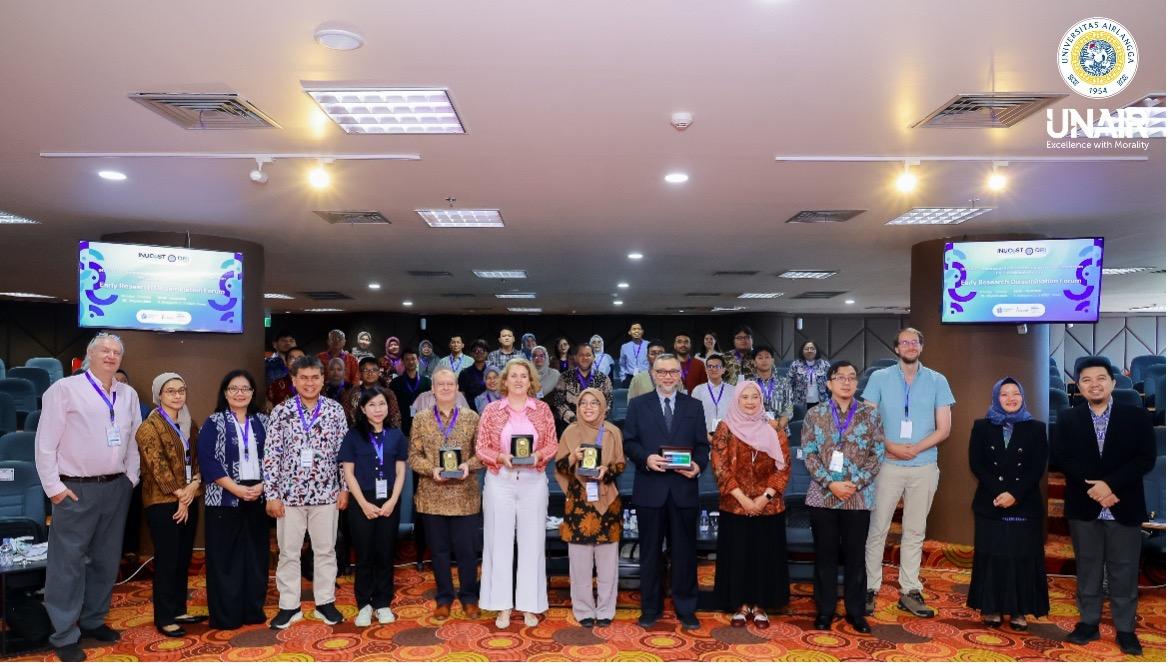
Photo by: DRI UNAIR
The first step in this research collaboration is matchmaking, which brings together researchers who share similar research interests. Matchmaking serves as an initial introduction process to help researchers form a team. Once matched, researchers write a joint research proposal and submit it through e-RISPRO, the platform of LPDP, Indonesia’s Academic and Research Funding Agency. In the first batch, eight research proposals were selected to receive funding. This collaboration between LDE and the Indonesian Ministry of Higher Education follows a matching fund principle, meaning that funding does not cross borders: Indonesian researchers receive research funding from the Indonesian government through LPDP, while LDE researchers receive mobility funding from LDE.
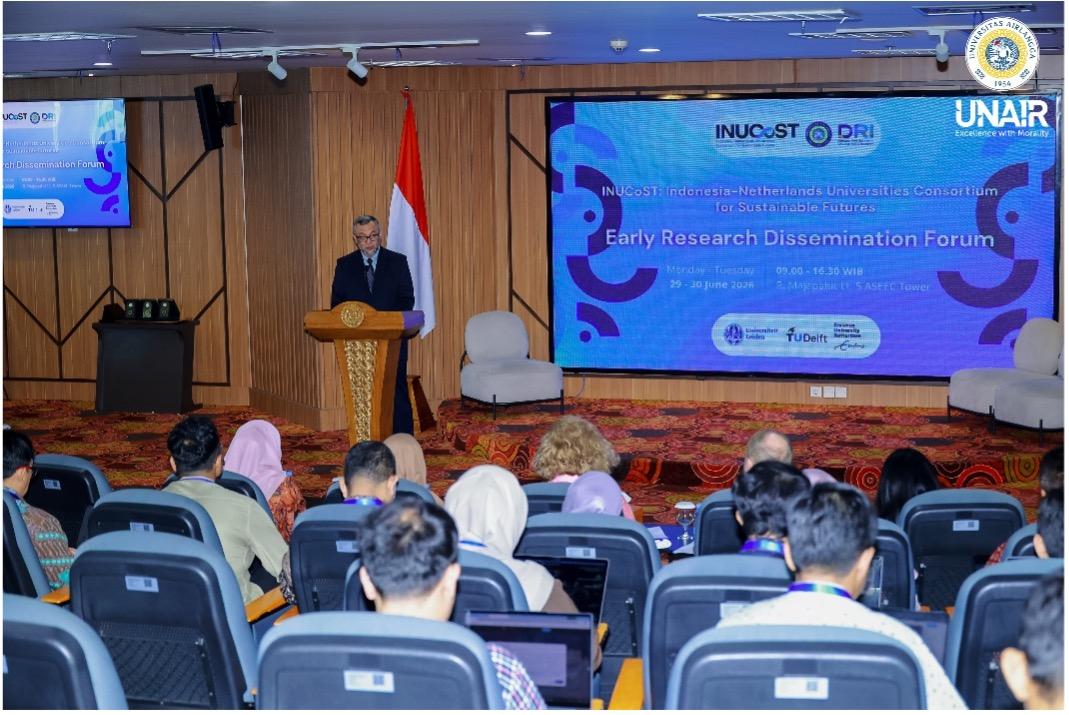
Photo by: DRI UNAIR
One year in, the LDE Centre in Indonesia, together with Universitas Airlangga, held the INUCoST Early Research Dissemination Forum on 29 and 30 June 2026. The event brought together principal investigators from Indonesia and the Netherlands, representatives from the Ministry of Higher Education and LPDP, the Education & Science Attaché of the Embassy of the Kingdom of the Netherlands in Indonesia, and the Directors of Research and Innovation from the partner universities in Indonesia. After the presentations from each team, all stakeholders were impressed by the research results. The forum served not only to monitor the progress of the INUCoST Batch 1 teams, but also to strengthen the collaboration between LDE and the Indonesian universities in developing a better world.
Prof. Ir. Mochamad Amin Alamsyah, Vice Rector I of Universitas Airlangga, delivered a warm welcome to all participants at the INUCoST Early Research Dissemination Forum. He highlighted the relevance of the Batch 1 key themes, Biodiversity, Artificial Intelligence (AI) & Smart Cities, and Energy Transition, to achieving sustainable development in Indonesia. He also emphasised that strong international research collaboration produces not only scientific publications, but also real impact for society. “Successful international collaborations are not only based on shared expertise, but also trust, openness, and a shared vision to create positive impact,” said Prof. Amin.
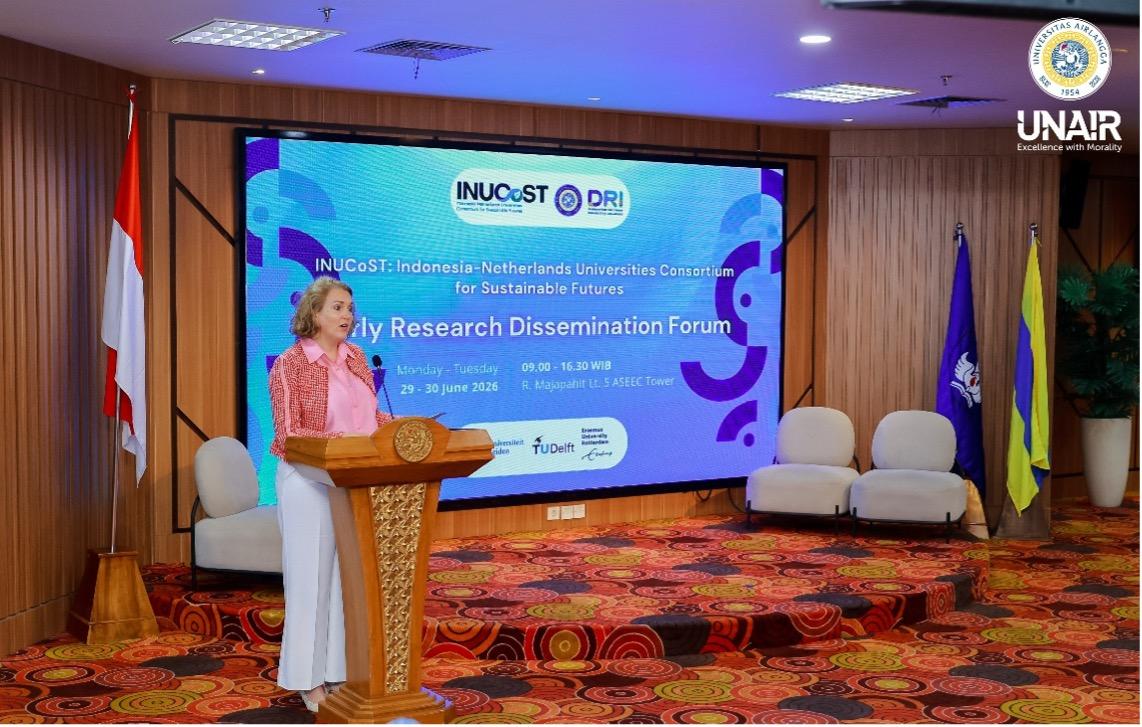
Photo by: DRI UNAIR
Yvonne Klerks, Education & Science Attaché of the Embassy of the Kingdom of the Netherlands in Indonesia, also expressed her appreciation to the researchers and all parties involved in the INUCoST Early Research Dissemination Forum.
She praised the bilateral cooperation between Indonesia and the Netherlands in higher education and science, and underlined the potential of this research collaboration to produce positive change in the future. In her keynote speech, she described INUCoST as a “best practice”, noting that it offers joint collaboration on research projects addressing challenges relevant to both countries, with the aim of creating the positive impact and transformation the world needs.
The workshop showed clear progress across the collaboration’s research areas. On the first day, discussions focused on research results in the Biodiversity, AI & Smart Cities, and Energy themes. The day continued with discussions in three small groups, each made up of researchers from different universities, aimed at identifying shared challenges and early lessons for improving the implementation of the collaboration in the years ahead.
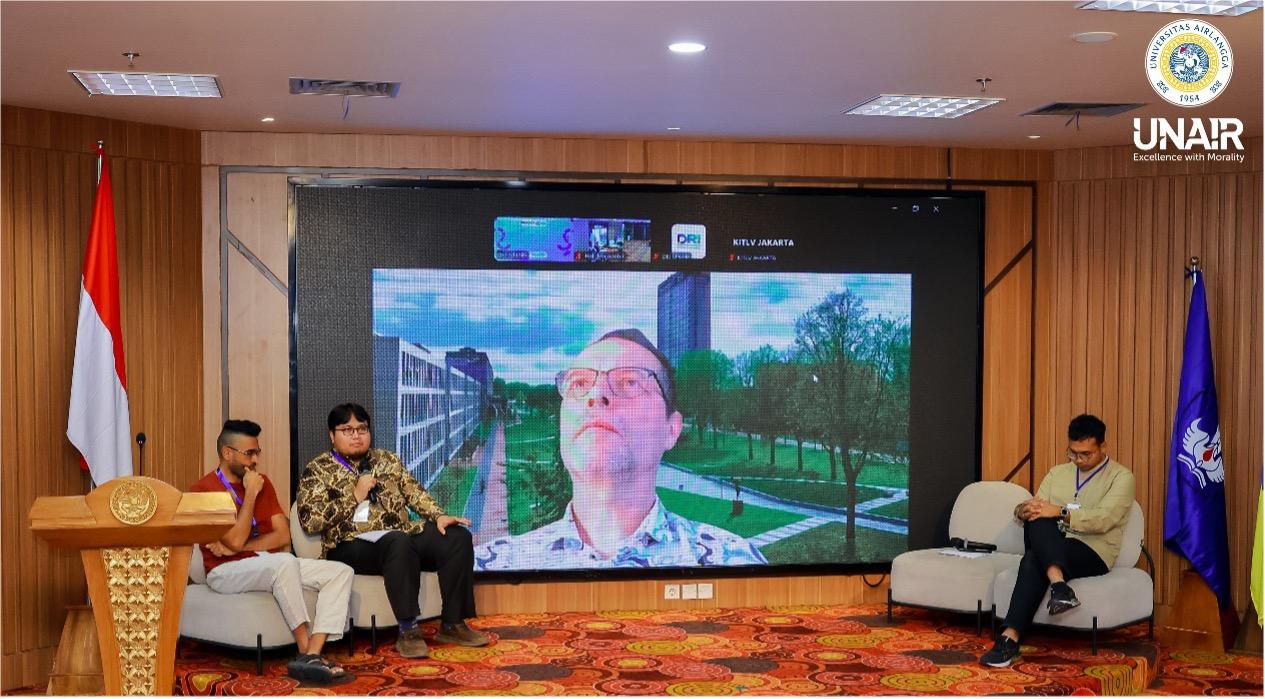
Photo by: DRI UNAIR
On the second day, the workshop turned to research plans for the second year and the administrative matters each team needs to prepare. This was followed by discussions among researchers working on the same topic, focused on joint publication plans, how to measure societal impact, and ideas for collaboration beyond INUCoST. These discussions showed strong interest among researchers not only in joint publications within their own teams, but also in interdisciplinary dissemination by involving relevant stakeholders more broadly.
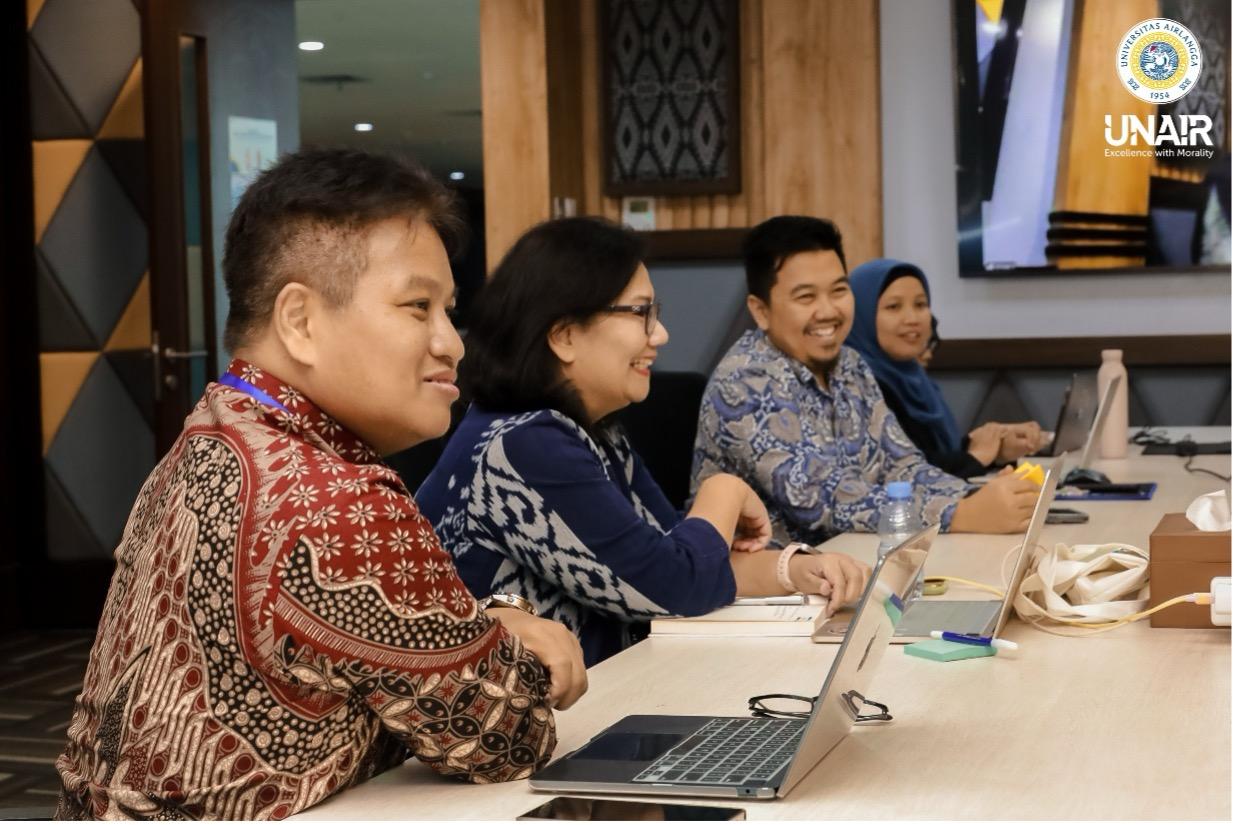
Photo by: DRI UNAIR
This collaborative research aims to produce not only knowledge but also societal impact, through advocacy and community development. Despite the administrative challenges involved, all stakeholders agreed to work toward a more institutionalised collaboration, one that includes double-degree programmes, cross-thematic publications, and innovative forms of dissemination such as podcasts, white papers, book chapters, and joint policy briefs, to deliver real impact to both society and policymakers.
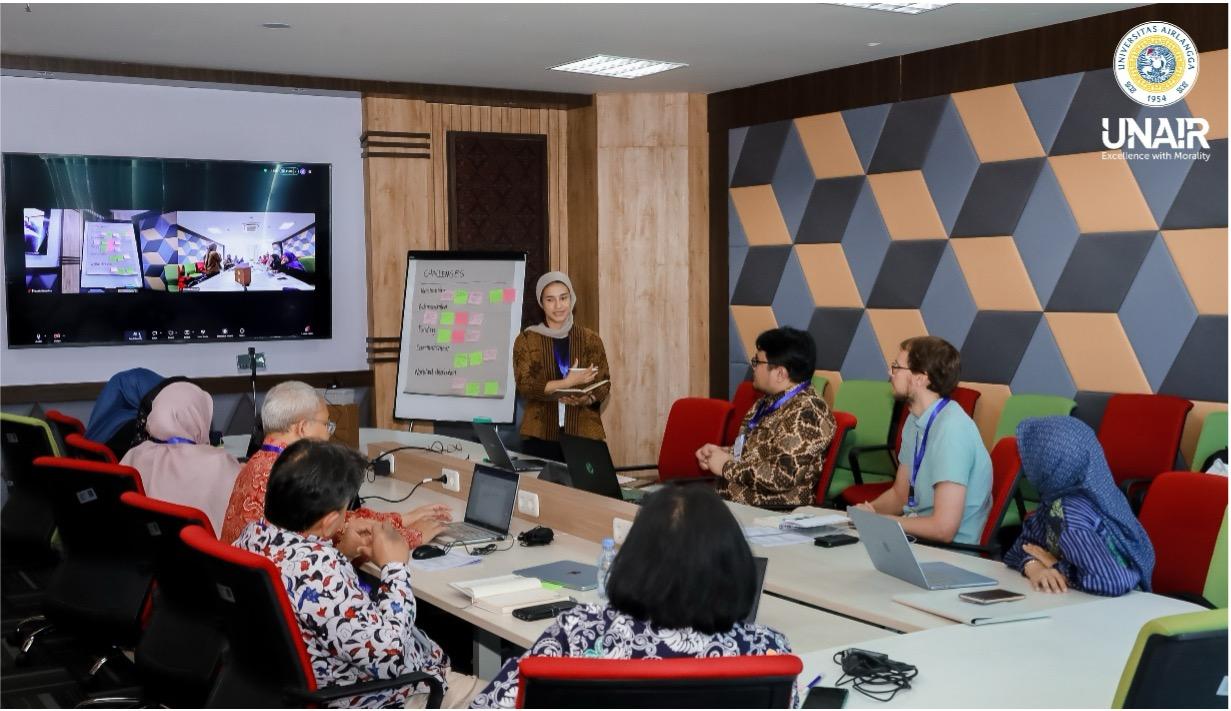
Photo by: DRI UNAIR